



Choose Heavy Haulers Because We Set the Standard
Bridge Girder Transport/Shipping Services
Girders carry the loads that everything else in a structure depends on. Getting them to the job site in the dimensional condition, surface integrity, and installation sequence requires an experienced logistics company. Heavy Haulers moves girders of all materials, spans, and configurations to bridge construction projects, building sites, and infrastructure programs nationwide. Contact us today for a free girder shipping estimate.

Quick. Reliable. Hassle-Free.
Speak with an expert logistics agent to move your equipment quickly and at an affordable rate!
(800) 908-6206Girder Shipping Company Near You
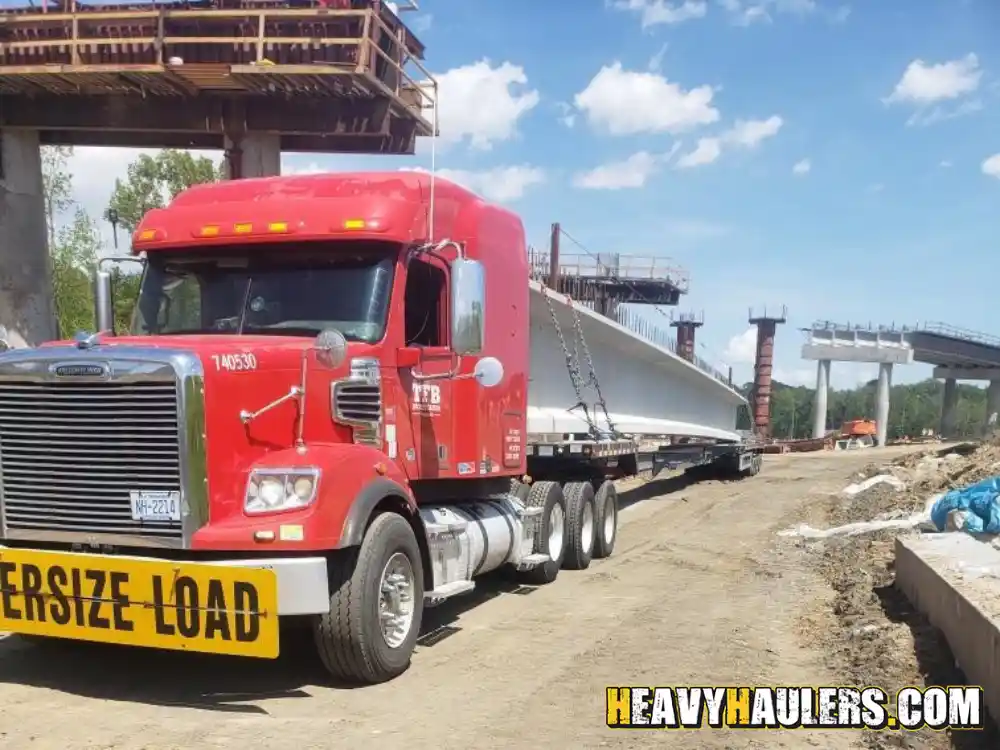
Girders are the primary structural elements that define a structure's span capability and load-carrying performance, and those performance characteristics depend on arriving with the dimensional accuracy, surface condition, and structural integrity that the design engineer specified and the inspector will verify at installation.
Our team has over 16 years of experience moving girders with the dimensional protection, oversize permit expertise, and erection sequence coordination that bridge and structural programs require. Call Heavy Haulers today for reliable girder hauling and get your free shipping estimate.
Understanding the Challenges of Girder Transport
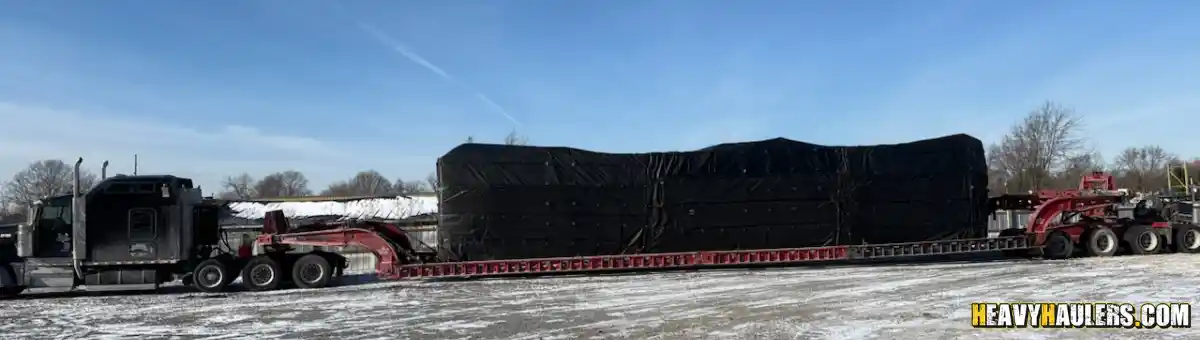
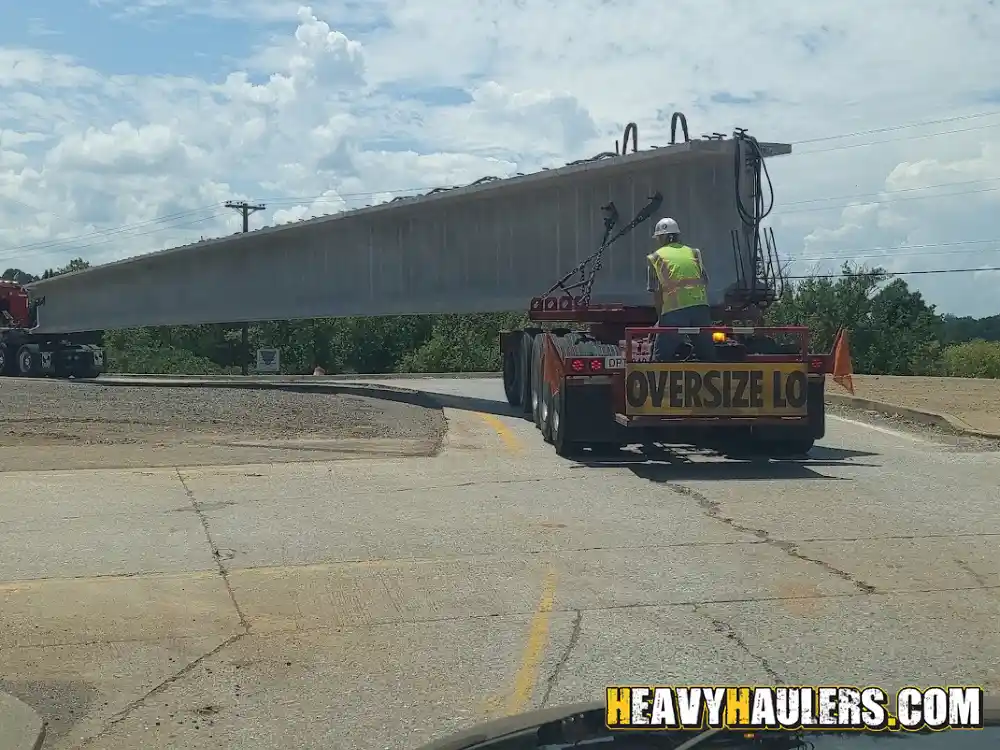
Bridge and long-span building girders are fabricated to span lengths that frequently exceed standard legal transport dimensions by significant margins. A steel plate girder for a highway bridge may be 150 to 200 feet long, requiring multi-state oversize permits, pilot car escorts front and rear, and in some cases law enforcement coordination for travel through certain jurisdictions. Prestressed concrete I-girders for standard highway spans run 100 to 150 feet in common design configurations. Managing the permit requirements for those span lengths across the states the delivery route crosses requires permit expertise that starts weeks before the fabrication is complete.
Steel and prestressed concrete girders are fabricated with designed camber profiles that account for dead load deflection and in some cases long-term creep in the installed structure. That camber geometry is a structural design parameter, not simply a fabrication variation. Transporting a cambered girder on supports that do not respect the camber profile applies reverse bending loads to the girder that work against the designed camber in ways that can affect both the camber magnitude and the girder's structural properties at the reverse-bent locations. For prestressed concrete girders where camber is a function of the prestress force and the elastic properties of the section, reverse bending during transport creates a stress condition that the prestress design did not account for.
Girders arrive at the bridge or building site with fabricated bearing surfaces, stiffener plates, and connection details that must be in the dimensional condition the erection drawing requires for crane pick and structural connection. Bearing surfaces that are dented or distorted during transport create a bearing condition that concentrates reaction force at the distorted location rather than distributing it uniformly across the bearing area as the design intended. Connection detail plates that are bent during transport create fit-up problems at the steel connections that the iron workers must resolve before the erection can proceed.
Slender-web plate girders and wide-flange sections with high depth-to-flange-width ratios are susceptible to lateral torsional buckling and web buckling under the combination of their self-weight and the support conditions during transport. A girder supported at the wrong locations during transport, or a girder subject to lateral forces from improper tie-down that apply torsional load to the section, can develop web out-of-plane deformation and lateral displacement that affects the girder's performance in its final installed condition. For slender sections near the limits of the compact section criteria, transport-induced buckling initiations may require engineering assessment before the girder can be installed.
Prestressed concrete girders are designed to carry their self-weight in a specific support configuration that places the support reactions at designated lifting and bearing points. Those support point locations are determined by the prestress force distribution and the resulting stress condition in the girder at the support reaction locations. Supporting a prestressed concrete girder at non-designated locations applies bending moments in the girder cross-section that the prestress was not designed to resist, potentially creating tensile cracking in the prestressed zone that compromises both structural performance and the girder's durability in its bridge deck environment.
Bridge girder erection follows a strict sequence determined by the structural design, the crane configuration, and the falsework and shoring arrangements at the bridge site. Girders that arrive out of erection sequence create a material management problem at the bridge site where girder storage is typically very limited. For bridge sites over active waterways, railroads, or highways where girder storage adjacent to the bridge is not possible, an out-of-sequence delivery creates a project logistics problem that affects the entire erection program.
HEAVYHAULERS.COM
START YOUR SHIPMENT TODAY!

How Heavy Haulers Ensures Efficient and Safe Girder Hauling
Before any cambered girder is loaded, our team confirms the girder's camber profile with the fabrication shop and plans support configurations that maintain the girder in its cambered condition during transport rather than applying reverse bending loads. For steel plate girders, support locations are calculated to minimize the reverse bending moment at the support points relative to the design camber. For prestressed concrete girders, the OEM-specified lifting and transport bearing point locations are confirmed and applied before the first crane pick. That camber-aware support approach preserves the structural geometry that the bridge design depends on.
For long-span girder loads that require oversize permits across multiple states, our logistics team initiates permit applications before fabrication is complete so approvals are in place before the girder is ready to ship. All state permit applications, travel window restrictions, escort vehicle requirements, and route approval submissions are managed simultaneously as a coordinated package. That integrated permit management approach ensures that the girder is permitted and ready to move the moment fabrication and inspection are complete.
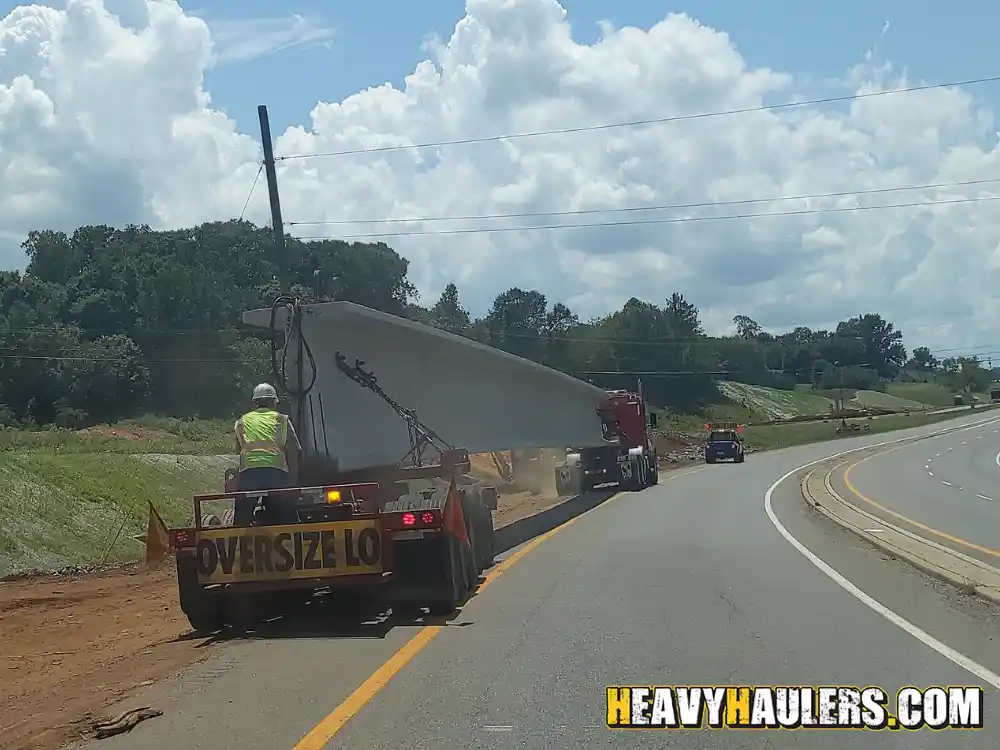
Before any girder is loaded, our team applies protection at all bearing surface and connection detail locations. Bearing surface areas receive rubber or foam padding that prevents the dent and distortion events that concentrated contact forces create at bearing surface locations. Connection detail plates and stiffener locations receive targeted protection that prevents the bending and impact events that create fit-up problems at the erection connections. That bearing and connection detail protection approach preserves the dimensional accuracy that crane erection and structural connection quality require.
For slender-web plate girders and wide-flange sections with high depth-to-flange ratios, our loading crew applies lateral stability blocking that prevents the torsional loading events that initiate web buckling and lateral displacement. Blocking at the compression flange locations resists the lateral movement that torsional load would cause. Tie-down configurations are planned to avoid applying net torsional load to the girder section during transport. That lateral stability approach protects the section geometry that compact section performance and web stability require.
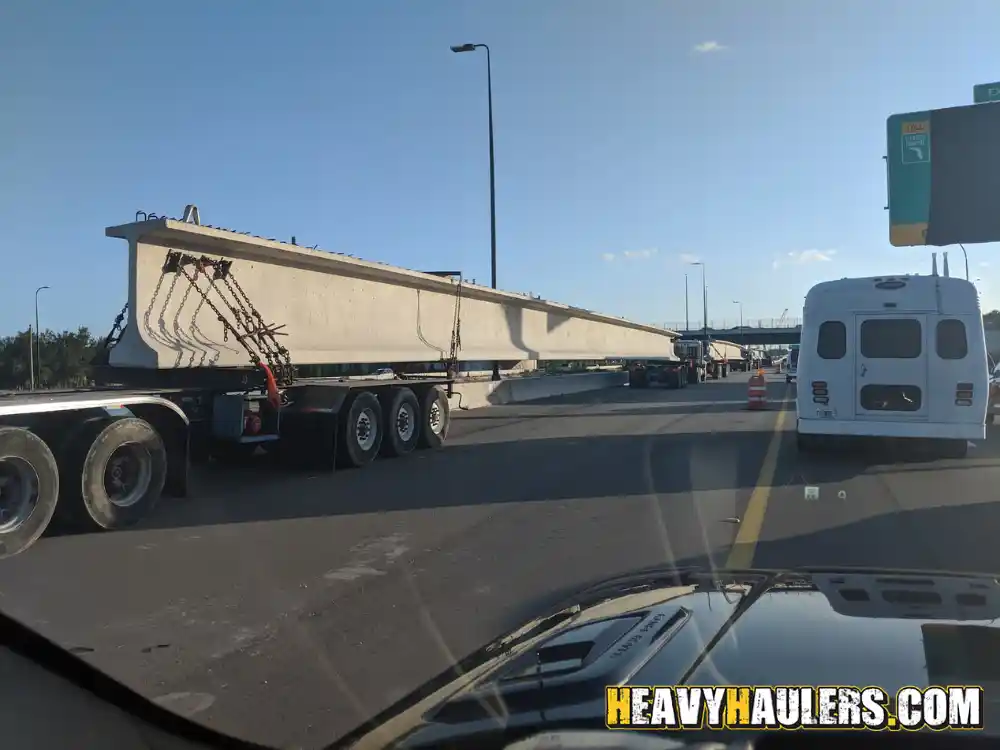
Before any girder delivery departs for a bridge or building site, your Heavy Haulers specialist confirms the erection sequence and crane pick schedule with the erection superintendent. Girder delivery is timed to arrive in the erection sequence order, with each girder arriving when the crane and falsework are ready for it. For bridge sites with limited storage, delivery timing matches the crane's ability to pick directly from the transport vehicle. That erection sequence coordination approach keeps the bridge erection program moving forward without out-of-sequence material management delays.
For girder loads with extreme length profiles that create clearance concerns at bridges, interchanges, and infrastructure along the route, our team conducts route clearance assessments before the delivery date. For loads where primary route clearances are marginal for the specific girder profile, alternate route assessments and in some cases physical surveys of critical locations are conducted before the truck is loaded. That route survey approach provides transport clearance confidence for extreme-length girder loads that desktop assessments cannot achieve.

Ready To Haul Your Equipment?
Our Specialists Are Here To Make Your
Transport Simple And Stress-Free.
Why Choose Heavy Haulers for Girder Shipping Services?
Girders define the structural performance of the bridges and buildings they go into, and their condition at delivery determines the erection quality and structural performance that the design engineer specified. A bearing surface distorted during transport creates a bearing reaction concentration that the structural analysis did not account for. A prestressed concrete girder supported at non-designated points during transport has a stress condition that the prestress design did not anticipate. An out-of-sequence delivery creates a material management problem at a bridge site with nowhere to store girders out of sequence. Heavy Haulers has been moving girders for over 16 years with the camber-aware support, bearing surface protection, and erection sequence coordination that bridge engineers, fabricators, and construction contractors depend on when girder condition at delivery determines structural program success.
Camber-Aware Support That Protects Structural Geometry
Support location calculation against the design camber profile, OEM-specified lifting point compliance for prestressed concrete girders, and reverse bending prevention through deliberate support placement are all standard on every cambered girder delivery. Protecting the structural geometry is the foundation of girder transport quality.
Fully Insured From Fabrication to Erection Site
Every girder shipment carries full cargo insurance from the fabrication facility to the bridge or building site. Steel plate girders, prestressed concrete bridge girders, wide-flange girder sections, and composite girder systems are all protected against loss or transit damage throughout the haul.
16 Years of Girder Transport
Heavy Haulers has been moving girders and structural bridge components for over 16 years. Our experience with camber protection, multi-state permit management, bearing surface care, and erection sequence coordination applies to every girder load we dispatch.
Every Customer From Individual Structural Project to Major Bridge Program
Whether you are a building contractor receiving a single wide-flange girder or a bridge construction program managing complete superstructure girder delivery logistics, Heavy Haulers moves girders at any scale with the same structural protection standards and dedicated specialist.
Pricing That Reflects the Structural Program Criticality of Your Girders
Girder shipping estimates from Heavy Haulers account for girder material, span length, camber requirements, permit complexity, bearing surface protection needs, and erection sequence timing before a rate is provided. One complete number before the truck is assigned.
Heavy Haulers is here to make sure your girders arrive in structural condition and ready for crane erection. Contact us now for a free girder shipping estimate.

We've Got You Covered
Count on us for the tools and services you need to get the job done
right and keep your projects moving!
equipment specifications
suitable trailers per equipment
Planning Assistance
Regional transport guidelines
Our heavy equipment specialists are ready to help