



Choose Heavy Haulers Because We Set the Standard
3D Printed Components Transport Services
3D printed components represent the leading edge of additive manufacturing, and they arrive at assembly facilities, test labs, and installation sites with geometries that are impossible to produce by conventional means and material properties that are defined by the printing process parameters. A transport event that cracks a printed part, contaminates a medical-grade printed surface, or distorts a precision printed geometry creates a replacement requirement that restarts a production process measured in hours rather than seconds. Heavy Haulers moves 3D printed components of all technologies, materials, and quantities to manufacturers, researchers, and individual customers nationwide. Call today for a free 3D printed components shipping estimate.

Quick. Reliable. Hassle-Free.
Speak with an expert logistics agent to move your equipment quickly and at an affordable rate!
(800) 908-62063D Printed Components Shipping Company Near You
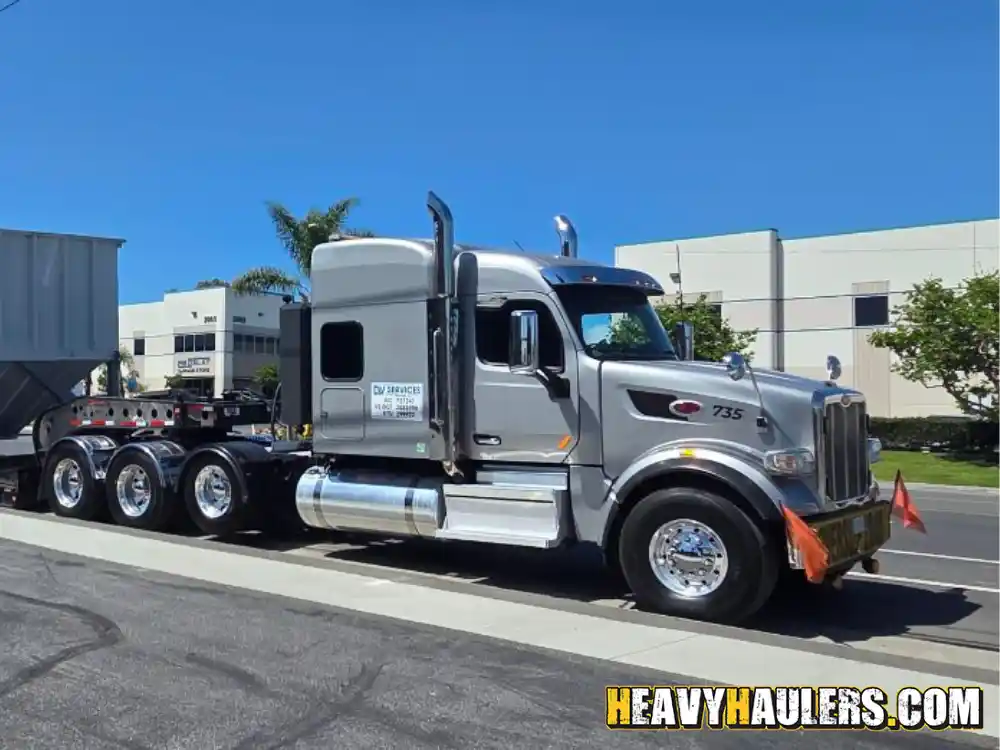
3D printed components represent a different class of freight from any other fabricated product because their geometric complexity, material anisotropy, and surface condition requirements are all specific to the printing technology and the application in ways that standard freight handling cannot accommodate without specific knowledge of what those requirements are. Our team has over 16 years of experience moving precision fabricated components and has developed the additive manufacturing-specific handling protocols that printed component supply chains require.
Call Heavy Haulers today for dependable 3D printed component hauling and get your free shipping estimate.
Understanding the Challenges of 3D Printed Component Transport
3D printed components built by layer deposition processes including FDM, SLA, and SLS have mechanical properties that are anisotropic, meaning they are stronger in some directions than others relative to the layer orientation during printing. The inter-layer bond direction is typically the weakest structural direction in the printed part. Impact during transport that applies force in the inter-layer direction at a stress concentration geometry can initiate delamination between layers that is not visible externally but that creates a structural failure point in service. For functional end-use printed parts in load-bearing applications, transport-induced inter-layer damage creates a reliability risk that the printing process verification cannot account for after the fact.
Many 3D printed components arrive from the printing facility with support structures already removed, leaving fine overhanging features, thin wall sections, and complex internal geometry exposed without the support that was present during printing. Those features are the most geometrically ambitious parts of the design and often the most structurally delicate in the printed condition. A thin printed wall section, a fine lattice structure, or a complex overhanging feature can break from contact forces during transport that would not damage a solid-section component of the same material. Protecting those features requires packaging that the printer or post-processing shop designs around the specific part geometry.
SLA and photopolymer 3D printed parts have surface finishes that are defined by the layer resolution of the printing process and the post-cure treatment applied after printing. Those surfaces are sensitive to UV exposure that can continue the photopolymerization reaction and change the surface properties of the part after printing. Uncured surface material on SLA parts that is exposed to UV during open transport can develop surface tack or dimensional change that affects the part's surface finish quality and dimensional compliance at the receiving inspection.
Metal additive manufactured components for aerospace, defense, and medical applications are produced with process certification requirements that trace the printing parameters, material powder lot, and post-processing operations that define the component's material properties. Those certifications must accompany the component through every supply chain transfer and must be available at the receiving facility for quality system review. A certification package that is lost or damaged during transport creates the same airworthiness or medical compliance issue as a lost mill certification on a conventionally produced metal part.
Large-format 3D printed components for architectural tooling, industrial fixtures, and prototype assembly applications can be dimensionally large but structurally weaker than conventional fabricated components of similar size because the print density and infill parameters are optimized for the application rather than for maximum structural strength in all directions. A large printed fixture that is handled as if it has the structural robustness of a machined metal component can experience structural failure at load concentrations that the print design never accounted for as a handling load case.
FDM and other thermoplastic additive manufacturing processes produce components whose dimensional stability is limited by the heat deflection temperature of the printing material. PLA-printed components have heat deflection temperatures around 60 degrees Celsius that can be approached in a hot trailer during summer transport. ABS and PETG-printed components have higher heat deflection temperatures but are still susceptible to dimensional distortion in extreme summer trailer conditions. For precision dimensional applications where printed component accuracy is a design requirement, summer trailer temperature management is a transport quality consideration.
HEAVYHAULERS.COM
START YOUR SHIPMENT TODAY!

How Heavy Haulers Ensures Efficient and Safe 3D Printed Component Hauling
Before any 3D printed component load is accepted, our team reviews the component geometry and print technology with the printing facility to understand the inter-layer orientation, fragile feature locations, and structural weak points specific to each printed component. Packaging and blocking configurations are planned around that geometry review rather than defaulted from standard plastic part handling. For complex printed geometries, the printing facility's packaging recommendation is confirmed and implemented before the truck is dispatched. That geometry-informed approach prevents the inter-layer and fragile feature damage that standard freight blocking creates on printed components.
For printed components where support structure removal has left fine features, thin walls, and complex overhanging geometry exposed, our team confirms that the printing facility has applied protective packaging or nesting that supports those features during transit. For components where the printing facility's standard packaging does not provide adequate support for transit-level vibration and handling, supplemental foam nesting is applied before loading. That fine feature protection approach preserves the geometric complexity that the printing process achieved and that the application requires.
For SLA and photopolymer 3D printed components, our team applies UV-blocking packaging before any transit that exposes the components to light, including through vehicle windows and trailer ventilation openings during daytime transport. For fully cured SLA parts, UV protection prevents the continued polymerization that alters surface properties after printing. For parts with specific surface hardness or tack requirements from controlled post-cure, UV protection during transit maintains the post-cure condition that the printing facility achieved. That UV protection approach preserves the surface quality that photopolymer printing produces.
Before any metal additive manufactured component load is accepted for aerospace, defense, or medical applications, our team confirms that process certification packages with matching part serial numbers are available and will travel with the delivery. For aerospace applications where additive manufacturing certification follows airworthiness standards, certification packages are confirmed against the customer's quality requirements before the truck is loaded. That certification management approach maintains the traceability chain that regulatory applications require for additively manufactured metal parts.
For large-format 3D printed components with print-direction-limited structural strength, our loading crew confirms maximum handling load directions with the printing facility before loading. Blocking is placed in the print-direction structural orientations identified by the printing facility rather than at locations that apply load in the inter-layer direction. For large printed fixtures with reduced infill densities, surface contact load is distributed across the maximum face area rather than concentrated at point blocking locations. That structural awareness approach prevents the large-format print failures that occur when handling loads exceed the inter-layer strength of the print.
For FDM-printed components in temperature-sensitive materials during summer hauls, our logistics team evaluates trailer temperature conditions before dispatch and considers delivery timing during cooler parts of the day for precision dimensional components in low-heat-deflection materials. For PLA-printed components in particular, summer trailer temperature management is treated as a material quality requirement rather than a handling preference. That temperature management approach prevents the dimensional distortion that heat exposure creates in thermoplastic printed components during summer transport.

Ready To Haul Your Equipment?
Our Specialists Are Here To Make Your
Transport Simple And Stress-Free.
Why Choose Heavy Haulers for 3D Printed Component Shipping Services?
3D printed components represent the output of additive manufacturing processes that are defined by printing parameters, material properties, and post-processing operations that cannot be quickly or inexpensively repeated if transport damage creates a replacement requirement. An inter-layer delamination from impact during loading, a photopolymer surface quality change from UV exposure in an open vehicle, or a certification package lost during transit all create program consequences that the 3D printing investment does not justify accepting from a transport failure. Heavy Haulers has been moving precision fabricated components for over 16 years and has developed the additive manufacturing-specific handling protocols, UV protection practices, and certification management standards that printing service bureaus, aerospace suppliers, and industrial manufacturers depend on when printed component quality at delivery determines application outcomes.
Geometry-Informed Blocking That Respects Print Direction Strength
Blocking placement confirmed with the printing facility, inter-layer orientation awareness, and fine feature protection from print-specific fragility are all applied on every 3D printed component load. That geometry-informed approach reflects the real structural difference between conventionally manufactured and additively manufactured components.
Fully Insured From Printing Facility to Application Site
Every 3D printed component shipment carries full cargo insurance from the printing facility to the delivery point. FDM functional prototypes, SLA precision parts, SLS end-use components, and metal additive manufactured aerospace parts are all protected against loss or transit damage throughout the haul.
Additive Manufacturing Aware Transport Experience
Heavy Haulers has been moving precision fabricated components including additive manufactured parts across aerospace, medical, industrial, and consumer product supply chains. Our experience with print direction structural awareness, photopolymer UV protection, and metal AM certification management applies to every 3D printed component load we handle.
Every Customer From Individual Designer to Major Aerospace Program
Whether you are an individual designer receiving a single prototype or an aerospace supplier managing ongoing metal additive manufactured component supply, Heavy Haulers moves 3D printed components at any scale with the same geometry-aware protection standards and dedicated specialist.
Pricing That Reflects the Additive Manufacturing Investment in Your Components
3D printed component shipping estimates from Heavy Haulers account for print technology, material type, component geometry, fragile feature requirements, certification documentation needs, and delivery site conditions before a rate is provided. One honest number that reflects what additive manufactured component transport actually requires.
Heavy Haulers is here to make sure your 3D printed components arrive in perfect condition and ready for your application. Contact us now for a free 3D printed components shipping estimate.
We've Got You Covered
Count on us for the tools and services you need to get the job done
right and keep your projects moving!
equipment specifications
suitable trailers per equipment
Planning Assistance
Regional transport guidelines
Our heavy equipment specialists are ready to help