

Choose Heavy Haulers Because We Set the Standard
Robotics Equipment Transport Services
Robotic systems are among the most sophisticated and value-dense equipment in modern manufacturing. A robot arm, a collaborative robot cell, or a fully integrated robotic welding system represents millions of dollars in engineering investment and months of integration work that transport handling can compromise in a single rough loading event. Heavy Haulers moves robotics equipment of all types and sizes to manufacturing facilities, system integrators, and industrial operations nationwide. Call today for a free robotics equipment shipping estimate.

Quick. Reliable. Hassle-Free.
Speak with an expert logistics agent to move your equipment quickly and at an affordable rate!
(800) 908-6206Robotics Equipment Shipping Company Near You
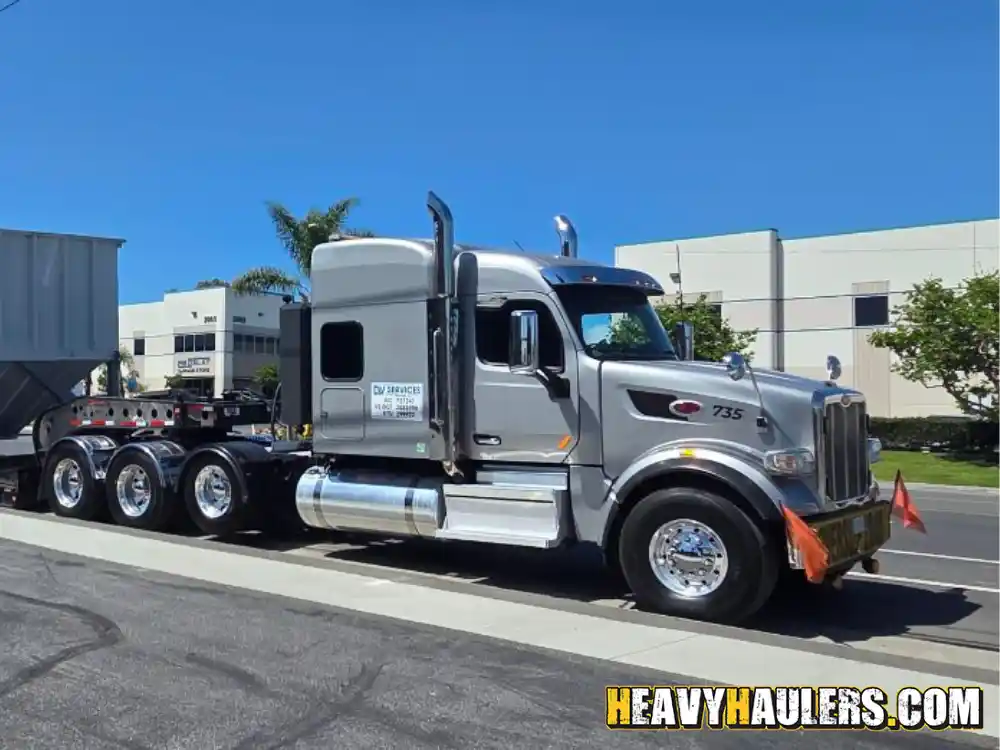
Robotics equipment represents the intersection of precision mechanical systems, sophisticated electronic controls, and complex software calibration that makes transport handling a critical quality event in the robot's deployment timeline.
Our team has over 16 years of experience moving precision industrial equipment with the care and coordination that robotic system deployments require. Call Heavy Haulers today for dependable robotics equipment hauling and get your free shipping estimate.
Understanding the Challenges of Robotics Equipment Transport
Robot arms and articulated robotic systems have precision joint mechanisms with gear trains, encoders, and servo systems that are calibrated at the manufacturing facility to the performance specifications the production application requires. Transport vibration and shock events that exceed the robot's specified transport shock limits can shift encoder reference positions, affect gear train preload conditions, and in worst cases damage precision bearing arrangements in the joint mechanism. A robot that arrives with disturbed joint calibration requires re-calibration before production use, adding commissioning time that the production deployment schedule did not plan for.
Robot controllers contain sophisticated electronics including CPU boards, servo drive modules, power supplies, and communication systems that are sensitive to the shock and vibration environment of road transport in ways that robust mechanical robot components are not. A controller board that experiences a sharp shock from a rough loading event can develop solder joint fractures, connector seating failures, or component damage that creates intermittent faults during robot operation. Those intermittent faults are among the most difficult to diagnose in deployed production systems because they do not appear consistently under test conditions.
Most robot manufacturers specify a shipping position for their robots that places the joints in an orientation that minimizes the gravitational and inertial loads on the joint mechanisms during transport. Moving a robot in a non-shipping position during transport applies continuous gravitational load to joint mechanisms in directions they were not designed to carry statically for extended periods, potentially creating pre-load changes in precision gear trains and bearing arrangements that affect robot positioning accuracy after deployment.
Robotic systems ship with teach pendants, end-of-arm tooling, safety light curtains, vision systems, and other peripheral equipment that are integral to the robot system's production function. Those peripherals are often more fragile than the robot arm itself and require packaging and protection that reflects their sensitivity. A teach pendant with a cracked screen or a damaged connector from rough handling during transport, a vision system with a misaligned sensor from impact, or a custom end-of-arm tool with a distorted precision feature all create commissioning problems that delay production startup.
Fully integrated robotic work cells, welding systems, and assembly stations arrive from the integration facility with robot, fixture, tooling, and safety system positions established relative to a common reference that defines the system's production accuracy. Transport handling that shifts any element of the integrated system relative to the others, whether through loose mounting hardware from vibration or through base frame distortion from improper blocking, creates a system alignment deviation that the commissioning team has to re-establish before the cell can be qualified for production use.
Robotic systems cannot be simply unloaded and powered up at the installation site. The site must have the electrical infrastructure, network connections, safety system hardware, and floor preparation completed before robot commissioning can begin. A robot delivery that arrives before the site preparation is complete creates a staging situation where the robot sits in a location that may not provide the controlled environment its electronics require, and where it may be in the path of ongoing construction activities that create damage risk after delivery.
HEAVYHAULERS.COM
START YOUR SHIPMENT TODAY!
How Heavy Haulers Ensures Efficient and Safe Robotics Equipment Hauling
Before any robot arm or articulated robotic system is loaded, our team confirms the manufacturer's specified shipping position with the robot supplier or integration team. Robots are loaded and secured in the manufacturer-specified shipping position, not in whatever position is most convenient for loading. For robots where the shipping position is documented in the manufacturer's installation manual, that documentation is reviewed before the loading sequence begins. That shipping position compliance approach prevents the joint mechanism loading conditions that non-shipping transport positions create over long hauls.
Robot controllers are loaded in packaging configurations that include vibration-dampening support beneath the controller enclosure and blocking that prevents the contact events that create shock loading in controller electronics. For controllers shipped separately from the robot arm, controller packaging condition is confirmed adequate for the transit vibration environment before loading. For integrated systems where the controller is mounted to the robot base, controller mounting hardware torque is confirmed and additional vibration dampening is applied at the mounting interface before transport. That controller protection approach prevents the electronic component damage that shock events create in sensitive robot control systems.
For fully integrated robotic work cells and welding systems, our loading crew identifies the base frame structural support points specified by the integration team and places blocking at those locations. Blocking never contacts robot tooling, sensor systems, or non-structural peripheral equipment. The integrated system is secured at its base structure in a way that distributes transport loads through the frame rather than through the precision components that the frame supports. That structural blocking approach preserves the dimensional relationships that the integration team established.
Before any robotic system load is accepted, our team confirms that teach pendants, vision systems, end-of-arm tooling, and other peripheral equipment are in packaging appropriate for their fragility and sensitivity. For peripherals where factory packaging has been removed for system integration, replacement packaging that provides equivalent protection is confirmed before loading. For peripherals with precision optical or sensor elements, those elements receive targeted protection that prevents the impact and misalignment events that affect calibration after delivery.
Before any robotic system delivery departs, your Heavy Haulers specialist confirms installation site preparation status with the system integrator or facility engineering team. Electrical infrastructure readiness, floor preparation completion, and safety system installation status are all confirmed before the truck is dispatched. For sites where preparation is not complete, delivery timing is coordinated to arrive after the site is ready to receive the robot safely. That site readiness confirmation prevents the post-delivery damage and environment exposure events that occur when robots are delivered to unprepared sites.
For robotic system deliveries where commissioning engineers will be on site for the delivery, your Heavy Haulers specialist confirms the commissioning team's availability window with the integration team before dispatch. Robot delivery is timed to arrive when the commissioning team is present so the robot can be moved directly from the delivery truck to its installation position under engineering supervision rather than being staged in an intermediate location. That commissioning window coordination keeps the robot deployment timeline moving from delivery through commissioning without unnecessary intermediate handling events.

Ready To Haul Your Equipment?
Our Specialists Are Here To Make Your
Transport Simple And Stress-Free.
Why Choose Heavy Haulers for Robotics Equipment Shipping Services?
Robotic system deployments run on commissioning timelines where every day between delivery and production qualification has a cost. A joint calibration disturbance from transport shock adds calibration time. A controller fault from electronic damage adds diagnostic and repair time. An integrated system alignment deviation adds re-qualification time. Those delays compound through the deployment timeline in ways that the transport cost cannot justify. Heavy Haulers has been moving precision industrial equipment for over 16 years with the shipping position compliance, controller protection, and commissioning coordination that robot manufacturers, system integrators, and production facilities depend on when robot deployment timeline performance is measured from delivery to production qualification.
Manufacturer Shipping Position Compliance
Robot shipping position confirmation before loading, manufacturer documentation review for position requirements, and transport securing in the specified position are all standard on every robotic system delivery. Protecting joint mechanism integrity through proper shipping position is the foundation of robotic equipment transport quality.
Fully Insured for All Robotic System Assets
Every robotics equipment shipment carries full cargo insurance that reflects the capital value of robotic systems. Robot arms, integrated work cells, collaborative robots, and AGV systems are all protected against loss or transit damage throughout the haul.
16 Years of Industrial Equipment Transport
Heavy Haulers has been moving precision industrial equipment and advanced manufacturing systems for over 16 years. Our experience with robot shipping position compliance, controller shock protection, and commissioning coordination applies to every robotics equipment load we dispatch.
Every Customer From Individual Robot to Businesses
Whether you are a facility receiving a single collaborative robot or a major manufacturer deploying a fully integrated robotic production cell, Heavy Haulers moves robotics equipment at any scale with the same precision protection standards and dedicated specialist.
Pricing That Reflects the Capital Value
Robotics equipment shipping estimates from Heavy Haulers account for system type, shipping position requirements, controller protection needs, site readiness conditions, and commissioning timing before a rate is provided. One complete number that reflects what robotic system transport quality actually costs.
Heavy Haulers is here to make sure your robotics equipment arrives in calibration-ready condition and on schedule for your commissioning team. Contact us now for a free robotics equipment shipping estimate.
We've Got You Covered
Count on us for the tools and services you need to get the job done
right and keep your projects moving!
equipment specifications
suitable trailers per equipment
Planning Assistance
Regional transport guidelines
Our heavy equipment specialists are ready to help