





Choose Heavy Haulers Because We Set the Standard
Titanium Transport Services
Titanium is one of the most technically demanding materials in industrial freight. It is lightweight, extraordinarily strong, and used in applications where a single certification failure or surface contamination event can ground an aircraft program or delay a medical device launch. Heavy Haulers moves titanium of all alloys and forms to aerospace fabricators, medical device manufacturers, and high-performance industrial operations nationwide. Call today for a free titanium shipping estimate.

Quick. Reliable. Hassle-Free.
Speak with an expert logistics agent to move your equipment quickly and at an affordable rate!
(800) 908-6206Titanium Shipping Company Near You
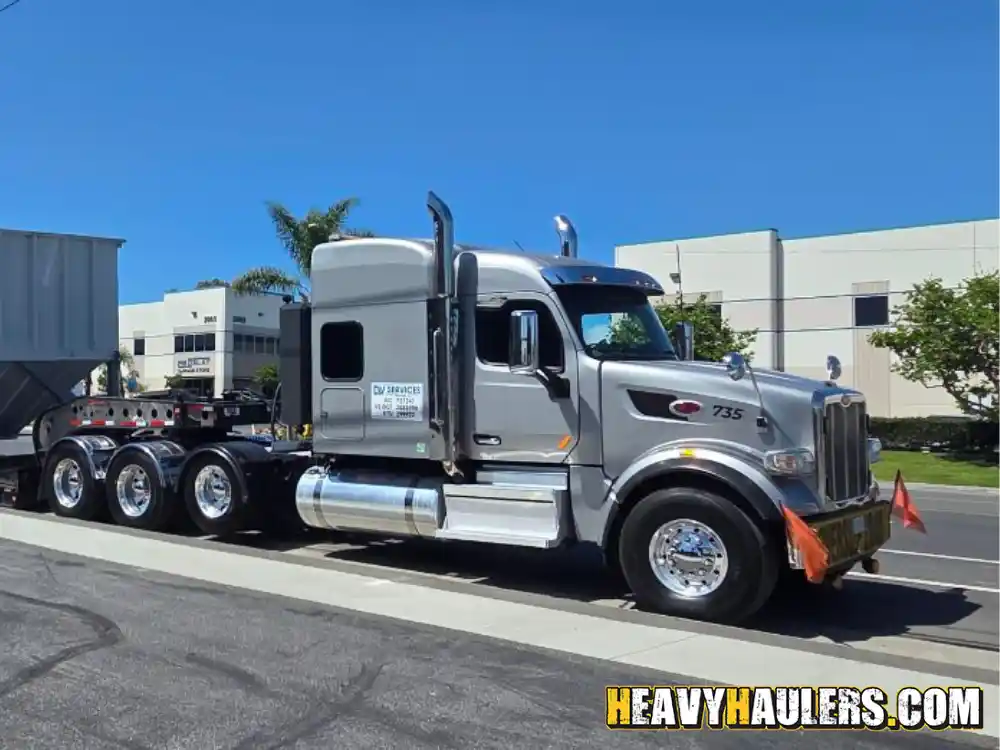
Titanium is the material that performs where other metals cannot, and the industries that depend on it have quality systems that trace every piece of titanium from the ingot to the finished component. A transport event that breaks that traceability chain, contaminates the surface, or creates dimensional damage that was not present at the mill creates a quality program exception that costs far more to resolve than the freight expense that caused it.
Our team has over 16 years of experience moving titanium with the certification management, contamination prevention, and handling discipline that aerospace and medical supply chains demand. Call Heavy Haulers today for dependable titanium hauling and get your free shipping estimate.
Understanding the Challenges of Titanium Transport
Titanium used in aerospace structural applications and medical implant manufacturing is subject to material certification requirements that exceed those of any other commercial metal. Aerospace titanium must be traceable to the mill ingot through a documented chain of custody that includes every processing step from melting through final temper. Medical-grade titanium requires biocompatibility certification in addition to mechanical property documentation. A certification gap anywhere in that chain, including during transport, creates a quality system exception that the aerospace or medical fabricator must resolve before the material can be used, and resolving it may require re-testing or re-sourcing the material entirely.
Titanium alloys, particularly the higher-strength grades used in aerospace applications, are susceptible to hydrogen embrittlement when exposed to hydrogen-bearing environments under mechanical stress. Certain chemical contamination events during transport that introduce hydrogen-bearing compounds to stressed titanium surfaces can initiate hydrogen absorption that reduces the alloy's fracture toughness. While this mechanism requires specific conditions to operate, the consequence in a safety-critical aerospace application is severe enough that chemical contamination prevention during transport is treated as a quality control requirement rather than just a handling preference.
Titanium welding for aerospace and medical applications requires a surface cleanliness standard that precludes any organic contamination, chloride residue, or oxide layer that was not produced under controlled conditions. Fingerprints, oil residue from handling equipment, and chloride contamination from road salt spray during open transport all create weld quality issues that the titanium fabricator must address with additional cleaning before welding can begin. For aerospace components where weld quality is a structural requirement, incoming surface contamination is not a minor inconvenience. It is a production quality input that affects every weld made from the affected material.

Titanium alloys span a range of compositions that look identical to the naked eye but have dramatically different mechanical properties. Commercially pure Grade 2 titanium and Ti-6Al-4V look the same but differ in yield strength by a factor of three. A mixed-alloy delivery where Grade 2 material is used in an application designed for Ti-6Al-4V creates a structural safety issue that the quality inspector may not catch until testing reveals the property discrepancy. Maintaining alloy segregation and identification throughout the transport process is a safety-critical quality requirement for titanium freight.
Titanium is produced by a limited number of mills globally, and supply chains for aerospace-grade titanium are managed against specific mill qualification programs at aerospace OEMs. A transport damage event that renders aerospace titanium unusable without re-sourcing creates a supply chain disruption that may take weeks or months to resolve if the specific alloy and form are in limited availability at qualified mills. The supply chain consequences of titanium transport failures are disproportionate to the freight cost in a way that other metal freight does not typically match.
Aerospace titanium plate and bar are produced to dimensional tolerances that reflect the precision of the structural analysis and manufacturing processes that will use them. Flatness deviation in aerospace plate, diameter deviation in precision titanium bar, and straightness tolerance in titanium tube all affect the machining programs and forming operations that transform the raw material into structural components. Transport handling that compromises those dimensional tolerances creates additional machining operations or material rejections that the aerospace fabricator's program schedule does not have budget or time for.
HEAVYHAULERS.COM
START YOUR SHIPMENT TODAY!

How Heavy Haulers Ensures Efficient and Safe Titanium Hauling
Before any aerospace or medical titanium load is accepted, our team confirms that mill certifications with matching heat and lot numbers are available and will travel with the delivery in a documented package. For aerospace titanium, our logistics team confirms the certification package against the customer's material specification requirements before the truck is loaded. Any certification discrepancy is identified at the loading facility before the material departs, not at the fabrication facility after a program-critical delivery has already been made.
Every titanium load we handle uses non-contaminating contact materials at every point where titanium contacts the trailer, blocking, or securing hardware. Chloride-free blocking materials, clean rubber-covered binder hardware, and non-reactive inter-layer separation are applied throughout the load. Drivers handling titanium loads wash hands or use clean nitrile gloves before contacting titanium surfaces. For open hauls, the load is protected from road spray that can deposit chloride contamination on titanium surfaces from road salt or chemical deicers. That complete contamination prevention approach addresses both the hydrogen embrittlement mechanism and the weld quality contamination that aerospace and medical fabricators require freedom from.

For mixed-alloy titanium deliveries, our loading crew maintains strict alloy segregation throughout the load. Each alloy grade is loaded in a separate, clearly identified section of the trailer with individual bundle tagging that matches the certification documentation. Mixed-alloy loads are never staged in a configuration where alloy identification could be confused during offloading. That segregation discipline maintains the alloy traceability that prevents the safety-critical consequences of wrong-alloy installation in aerospace and medical applications.
For titanium destined for aerospace and medical welding applications, our team applies surface cleanliness protocols that prevent organic and chloride contamination from the loading process. Contact surfaces are confirmed clean and dry before any titanium is loaded. Protective packaging applied at the mill or service center is confirmed intact before the load is accepted, and any packaging compromise is documented and addressed before the truck departs. For long-haul open transport, additional protective covering is applied over factory packaging to prevent road environment contamination.
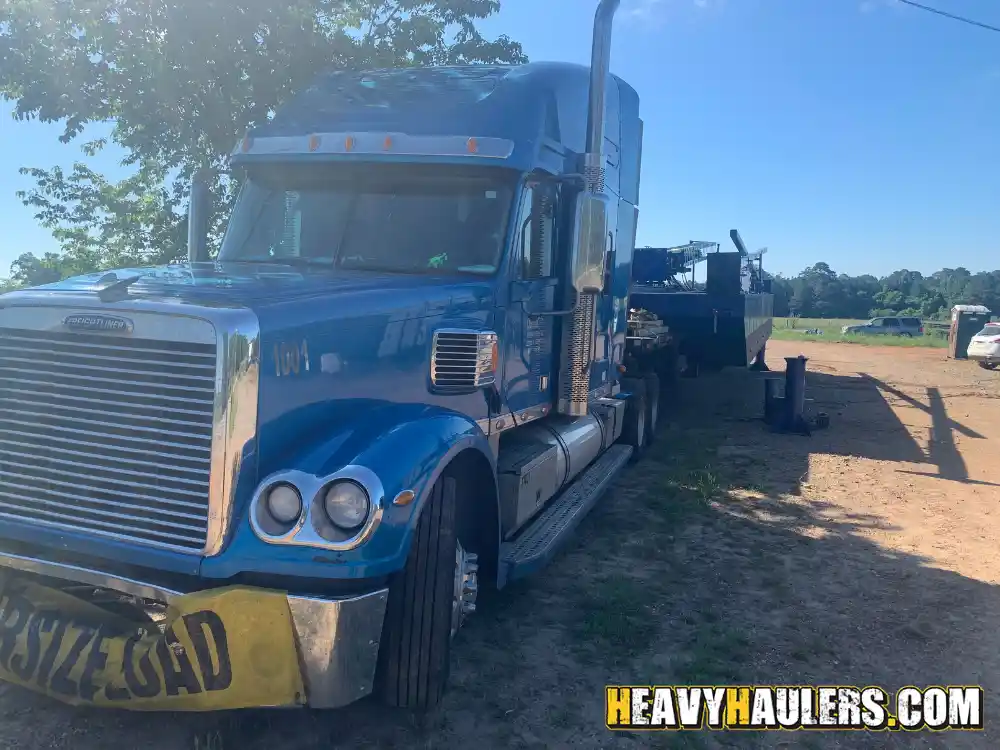
For aerospace titanium plate and precision bar, support dunnage is placed at intervals calculated to prevent gravity-induced dimensional deviation during transit. For plate with tight flatness tolerances, dunnage support intervals are tightened beyond standard spacing based on plate thickness and alloy modulus. For precision bar stock with straightness requirements, full-length support at calculated intervals prevents the gravitational bow that creates run-out in precision machining operations.
For aerospace and medical titanium loads representing significant material value and supply chain criticality, Heavy Haulers applies enhanced delivery security protocols. Direct receiving facility confirmation before departure, defined driver check-in intervals, and confirmed delivery window scheduling are all applied as standard practice on titanium loads. That security and confirmation discipline reflects the real consequences of a titanium delivery that does not arrive as planned on a program-critical schedule.

Ready To Haul Your Equipment?
Our Specialists Are Here To Make Your
Transport Simple And Stress-Free.
Why Choose Heavy Haulers for Titanium Shipping Services?
Titanium supply chain failures have consequences that extend far beyond the freight transaction. A certification gap on aerospace titanium grounds a program until the traceability is restored or the material is re-sourced. A surface contamination event on medical titanium requires re-processing before the material can be used in an implant application. A wrong-alloy delivery to an aerospace structural fabricator creates a safety-critical quality exception that the program cannot move forward without resolving. Heavy Haulers has been moving titanium for over 16 years with the certification chain of custody management, chemical contamination prevention, and alloy segregation discipline that aerospace fabricators, medical manufacturers, and defense contractors depend on when the material absolutely has to arrive right.
Certification Chain of Custody That Never Gets Broken
Mill certification confirmation, heat number verification, and documented chain of custody from loading through delivery are applied as non-negotiable standards on every aerospace and medical titanium load. That certification discipline is what separates a titanium-capable carrier from a general freight operator.
Fully Insured for High-Value Aerospace and Medical Grade Material
Every titanium shipment carries full cargo insurance that reflects the per-pound value and replacement difficulty of aerospace and medical-grade titanium. All grades from commercially pure to Ti-6Al-4V are protected against loss or transit damage throughout the haul.
16 Years of High-Performance Metal Transport Experience
Heavy Haulers has been moving titanium and high-performance specialty metals for over 16 years. Our experience with aerospace certification management, chemical contamination prevention, and alloy segregation applies to every titanium load we dispatch.
Every Customer From Individual Fabricator to Aerospace Program
Whether you are a specialty machining shop receiving a small titanium bar order or an aerospace fabricator managing ongoing titanium plate supply for a production program, Heavy Haulers moves titanium at any scale with the same certification and contamination prevention standards.
Pricing That Reflects the Criticality of Your Material
Titanium shipping estimates from Heavy Haulers account for alloy grade, certification requirements, contamination prevention protocols, security measures, and delivery site conditions before a rate is provided. One complete number that reflects what aerospace and medical-grade titanium transport actually requires.
Heavy Haulers is here to make sure your titanium arrives fully certified, uncontaminated, and ready for your precision manufacturing operation. Contact us now for a free titanium shipping estimate.

We've Got You Covered
Count on us for the tools and services you need to get the job done
right and keep your projects moving!
equipment specifications
suitable trailers per equipment
Planning Assistance
Regional transport guidelines
Our heavy equipment specialists are ready to help