



Choose Heavy Haulers Because We Set the Standard
Plastic Rod Transport Services
Plastic rod stock is the raw material for machined plastic components in applications ranging from precision medical devices to industrial wear parts and chemical processing equipment. Arriving at the machine shop in the dimensional condition, surface quality, and moisture content the application requires determines whether the rod goes directly into production or requires additional preparation. Heavy Haulers moves plastic rod of all polymer types, diameters, and quantities to machine shops, fabricators, and industrial users nationwide. Contact us today for a free plastic rod shipping estimate.

Quick. Reliable. Hassle-Free.
Speak with an expert logistics agent to move your equipment quickly and at an affordable rate!
(800) 908-6206Plastic Rod Shipping Company Near You
Plastic rod for precision machining applications carries the same dimensional and material quality requirements as precision metal bar stock, with the additional complexity of moisture sensitivity in hygroscopic polymers, UV stability concerns in certain formulations, and temperature-related dimensional changes that metal bar stock does not exhibit.
Our team has over 16 years of experience moving plastic rod with the straightness protection, moisture management, and delivery coordination that precision plastic machining operations require. Call Heavy Haulers today for reliable plastic rod hauling and get your free shipping estimate.
Understanding the Challenges of Plastic Rod Transport
Plastic rod for precision machining applications is produced to straightness tolerances that allow it to run true in the chuck of a CNC lathe or machining center without excessive run-out. Plastic rod has a lower elastic modulus than metal rod of equivalent diameter, which means it deflects more under its own weight across unsupported spans during transport. A length of nylon rod or acetal rod supported only at the ends across a 12-foot span will develop a measurable bow under gravity during a long haul that can push the rod outside its straightness tolerance at the machine shop's incoming inspection.
Engineering polymers including nylon, acetal, and ABS absorb moisture from the atmosphere at rates that depend on the polymer chemistry, the relative humidity during exposure, and the surface area exposed. Moisture absorption causes dimensional swelling in precision rod that affects the rod's outside diameter and its machining behavior. A nylon rod that absorbs significant moisture during open transport swells beyond its nominal diameter specification and may require conditioning before machining to achieve the dimensional accuracy the application requires. For applications where moisture content of the rod material is a process parameter, packaging integrity during transport is a production quality input.
Plastic rod ends that receive impact damage during loading and transit develop end face irregularities that affect chuck engagement at the machine. A rod end that is chipped, cracked, or out-of-square from impact cannot be engaged in the machine chuck without the end preparation step that removes the damaged material. For small-diameter rod in high-production machining operations, that end preparation adds a setup step to every length of rod in the batch, accumulating into a significant production cost across a full delivery.
Certain plastic rod materials, including some nylon formulations, UHMW polyethylene, and UV-stabilized specialty polymers, are produced with UV stabilizer packages that maintain mechanical properties during outdoor service. Those stabilizers are consumed by UV exposure, and rod that is exposed to direct sunlight during open transport on a flatbed loses UV stabilizer from the surface layer before the material reaches the application where that stabilizer was specified. For UV-sensitive polymer rod in outdoor service applications, UV exposure during transport reduces the service life of the finished component below what the material specification was intended to deliver.
Large-diameter plastic rod for heavy wear part and industrial component applications can be surprisingly heavy despite plastic's lower density relative to metals. A bundle of 6-inch diameter UHMW rod in standard lengths represents substantial weight, and a full truckload of large-diameter engineering polymer rod can approach legal weight limits before the trailer deck is visually close to full. Weight management on large-diameter plastic rod loads requires per-bundle weight calculation rather than visual load planning.
Plastic rod surfaces, particularly for chemically sensitive engineering polymers in food grade and pharmaceutical applications, can be contaminated by chemical transfer from blocking materials, binder hardware lubricants, and separation materials that contain reactive compounds. PTFE rod for pharmaceutical applications, food-grade nylon for food contact applications, and medical-grade polymer rod for implant machining all require freedom from chemical contamination that standard freight handling materials may introduce at contact points during transport.
HEAVYHAULERS.COM
START YOUR SHIPMENT TODAY!
How Heavy Haulers Ensures Efficient and Safe Plastic Rod Hauling
For engineering polymer rod loads, our team places support dunnage at intervals calculated to prevent gravity deflection across the full rod length during transit. For standard 8-foot and 12-foot rod lengths, support intervals are set based on rod diameter and polymer elastic modulus rather than defaulting to standard metal bar stock spacing. For large-diameter rod where self-weight deflection is less of a concern, support intervals focus on preventing lateral roll rather than gravity bow. That polymer-specific support approach maintains the straightness tolerance that precision plastic machining requires.
For hygroscopic engineering polymer rod including nylon, acetal, and ABS, our team confirms moisture barrier packaging integrity before loading. For rod where factory packaging has been removed or compromised, sealed polyethylene bag packaging is applied around each bundle before the load is accepted. For long-haul moves where atmospheric moisture exposure is a concern, desiccant packets are placed inside the moisture barrier packaging before sealing. That moisture barrier approach keeps hygroscopic rod within its moisture content specification through delivery.
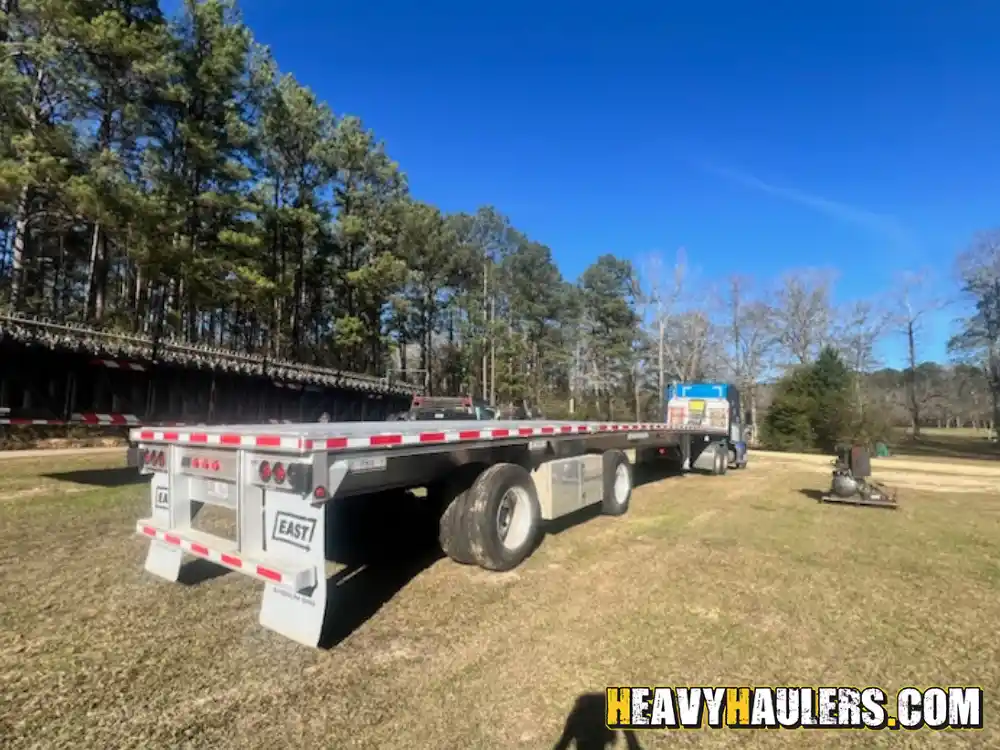
Every plastic rod bundle we haul has end protection applied at both bundle ends before loading. Foam caps, plastic end protectors, or cut foam discs are placed at rod end locations to prevent the impact damage that causes end face chipping and cracking. For high-production machining operations where end preparation adds to every length of rod in the batch, end protection that arrives undamaged at the machine shop eliminates that preparation step entirely.
For UV-sensitive engineering polymer rod on open flatbed equipment, opaque covering is applied before the truck departs the supply facility. For products where UV stabilizer content is a specification requirement for outdoor service applications, UV protection during transport is treated as a material quality requirement rather than a handling preference. That UV protection approach preserves the stabilizer content that determines the finished component's outdoor service life.
For food-grade, pharmaceutical-grade, and medical-grade polymer rod, our team uses chemically clean, inert blocking and separation materials that are confirmed free of reactive compounds before contact with the rod surface. Standard binder hardware lubricants and treated wood blocking are excluded from these loads. That contamination prevention approach protects the chemical purity of rod destined for food contact, pharmaceutical, and medical applications where surface chemical contamination creates regulatory compliance issues.
For plastic rod deliveries to precision machining operations with production schedule dependencies, your Heavy Haulers specialist coordinates delivery timing with the machine shop's production scheduler. Rod availability by polymer type, diameter, and length is confirmed against the machining program requirements before delivery is scheduled. That production schedule coordination keeps plastic rod arriving when the machining program needs it without creating inventory gaps that stop the machines.

Ready To Haul Your Equipment?
Our Specialists Are Here To Make Your
Transport Simple And Stress-Free.
Why Choose Heavy Haulers for Plastic Rod Shipping Services?
Plastic rod supply chain failures affect machining production in specific and immediate ways. Rod that arrives bowed beyond straightness tolerance creates run-out in the machine that produces out-of-tolerance parts. Nylon rod that absorbed moisture during transport requires conditioning before the dimensional specification can be achieved in machining. End-damaged rod in a high-production operation adds preparation time to every length in the batch. Heavy Haulers has been moving plastic rod for over 16 years with the full-length support, moisture barrier management, and end protection standards that precision plastic machining operations depend on when rod condition at delivery determines production quality.
Straightness Protection Calibrated to Polymer Elastic Modulus
Support intervals calculated for plastic rod's lower elastic modulus rather than defaulted from metal bar stock spacing are standard on every plastic rod load. That polymer-specific support approach maintains the straightness specification that CNC lathe and machining center operations require on incoming rod stock.
Fully Insured From Distributor to Machine Shop
Every plastic rod shipment carries full cargo insurance from the supply facility to the machining operation. Engineering polymer rod in nylon, acetal, UHMW, PTFE, and specialty alloys is protected against loss or transit damage throughout the haul.
16 Years of Engineering Polymer Material Transport
Heavy Haulers has been moving plastic rod and engineering polymer materials for over 16 years. Our experience with straightness support, hygroscopic moisture management, end protection, and food-grade contamination prevention applies to every plastic rod load we dispatch.
Every Customer From Individual Machine Shop to Major Distributor
Whether you are a small machine shop receiving a single bundle of polymer rod or a plastics distributor managing high-volume engineering polymer inventory, Heavy Haulers moves plastic rod at any scale with the same straightness standards and dedicated specialist.
Transparent Pricing for Any Rod Order
Plastic rod shipping estimates from Heavy Haulers account for polymer type, rod diameter, bundle weight, moisture protection requirements, and delivery site conditions before a rate is provided. One honest number before the truck is assigned.
Heavy Haulers is here to make sure your plastic rod arrives straight, dry, and ready for your machining operation. Contact us now for a free plastic rod shipping estimate.
We've Got You Covered
Count on us for the tools and services you need to get the job done
right and keep your projects moving!
equipment specifications
suitable trailers per equipment
Planning Assistance
Regional transport guidelines
Our heavy equipment specialists are ready to help