




Transport Highlights
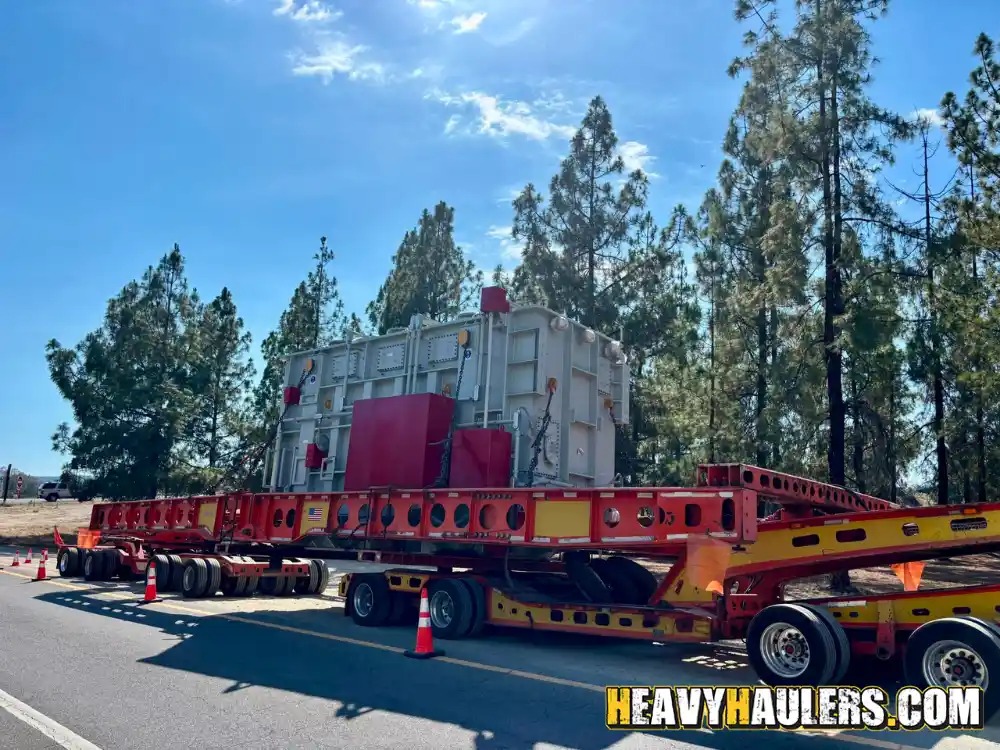
Coordinating a $1.2 Million Transformer From Vessel to Grid Site
Moving a 208,616-pound power transformer is complex under ideal conditions. For Heavy Haulers logistics agent Dylan Barron, transporting this transformer from Long Beach to an energy grid site in Jacumba, California required months of coordination and several changes to the original plan before the load ever reached its final destination.
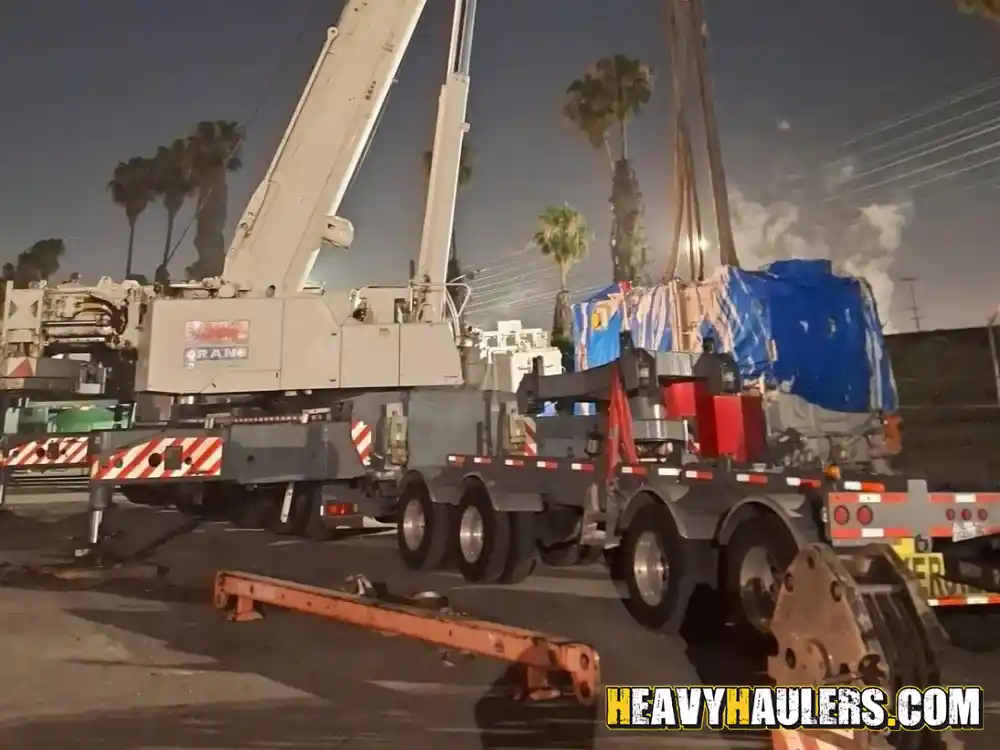
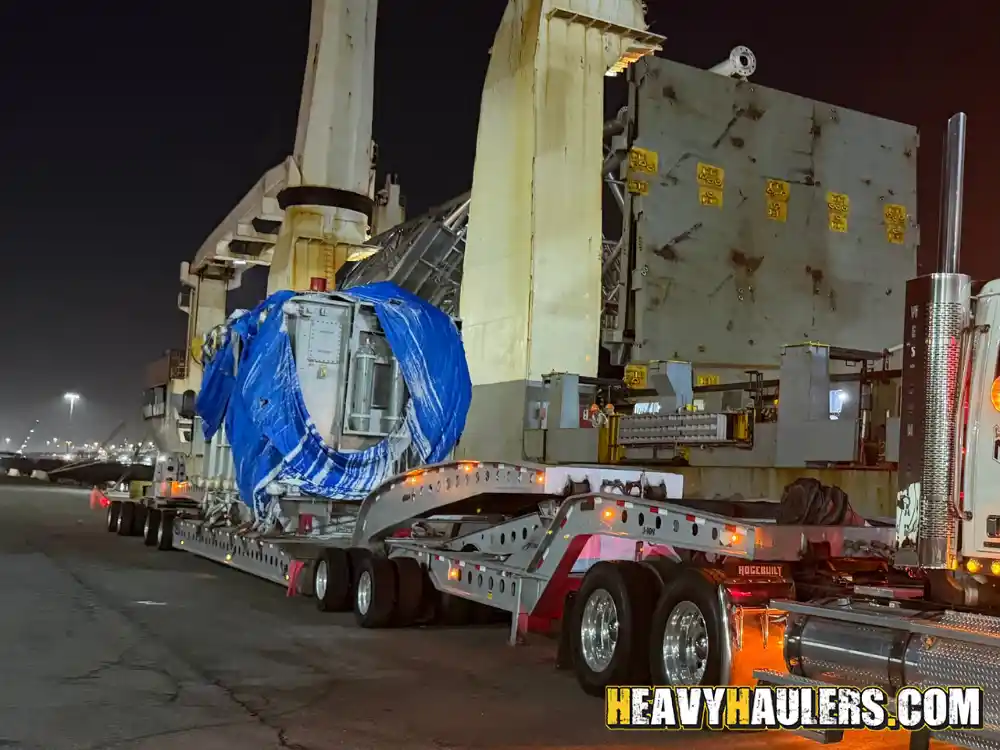
The 1 MVA 138/34.5 kV power transformer arrived in California by ship and was discharged directly from the vessel. The destination site wasn't ready to receive it, so Dylan coordinated storage at a crane company's facility for more than three months while contractors continued preparing the energy grid site.
That storage period was only the beginning. As the delivery approached, Dylan and the project team discovered that conditions at the destination didn't match the drawings they had been provided. Getting the transformer safely onto its pad would require a new plan.
Transport Dimensions and Details |
|
|---|---|
| length | 22.40' |
| width | 11.60' |
| height | 13.30' |
| weight | 208616.00 lbs |
| Equipment | 1 MVA 138/34.5 kV Power Transformer |
| Cargo Value | $1,200,000.00 |
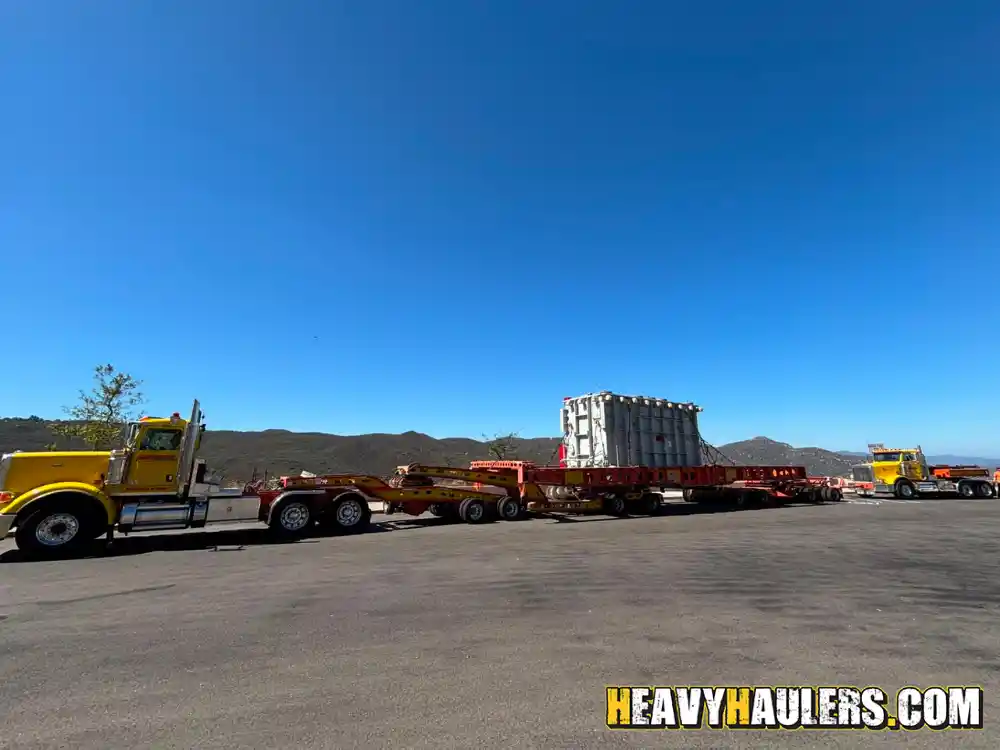
| Trailer Type | Platform trailer with custom support beams |
| Crane | 550-Ton Crane |
| Client | Ayr Energy |
| Transport Classification | Superload |
When the Delivery Site Didn't Match the Plans
A project of this size depends heavily on accurate site information. Dylan and the Heavy Haulers team had been provided drawings showing the layout and specifications of the delivery site. As preparations for the final move progressed, they discovered the site hadn't been built to those specifications.
For a transformer weighing more than 104 tons, being off by even a relatively small amount can change the entire delivery plan.
Dylan participated in several meetings with the contractors and other project stakeholders to determine how the transformer could safely reach its intended location. Rather than forcing the original transport plan into a site that could no longer accommodate it, the team worked through the access problem before proceeding.
The solution called for the general contractor to construct a dirt ramp that would provide the necessary access to the transformer pad. The ramp received engineering review and approval before the transport moved forward.
Adapting the Platform Trailer to the Transformer
The site wasn't the only place where the provided dimensions created a challenge.
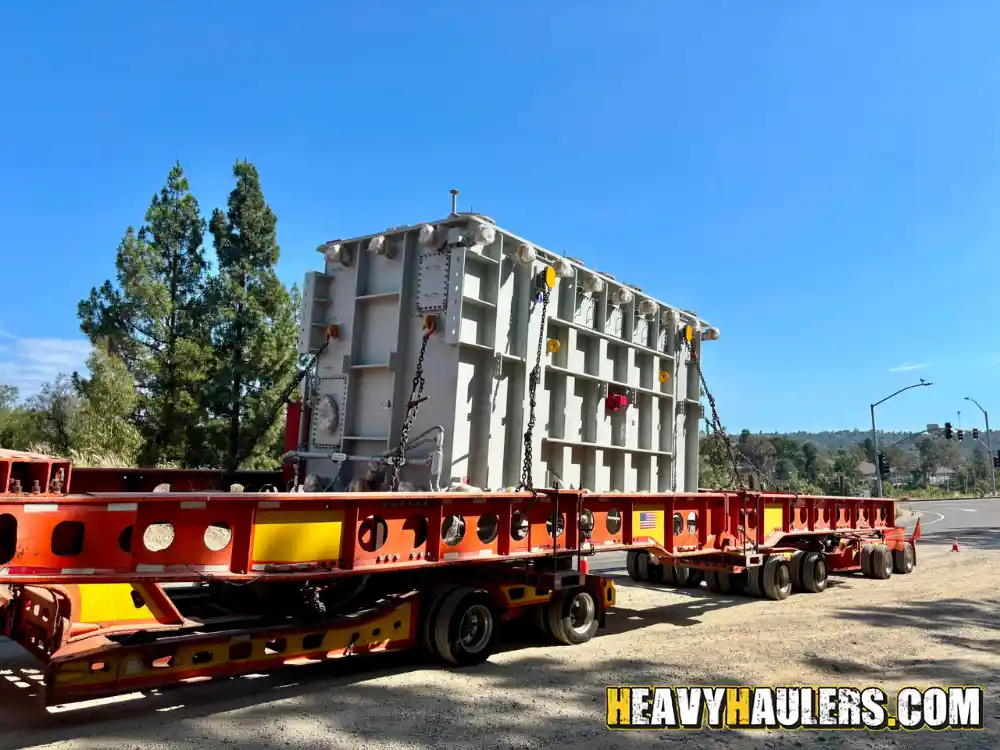
The transformer was transported on a platform trailer with beams positioned to support its substantial weight. However, the dimensions shown in the project drawings were approximately one foot off. The discrepancy meant the transformer couldn't be loaded in the originally expected position while clearing the trailer's enclosure beams.
Dylan and the transport team adapted the loading configuration instead.
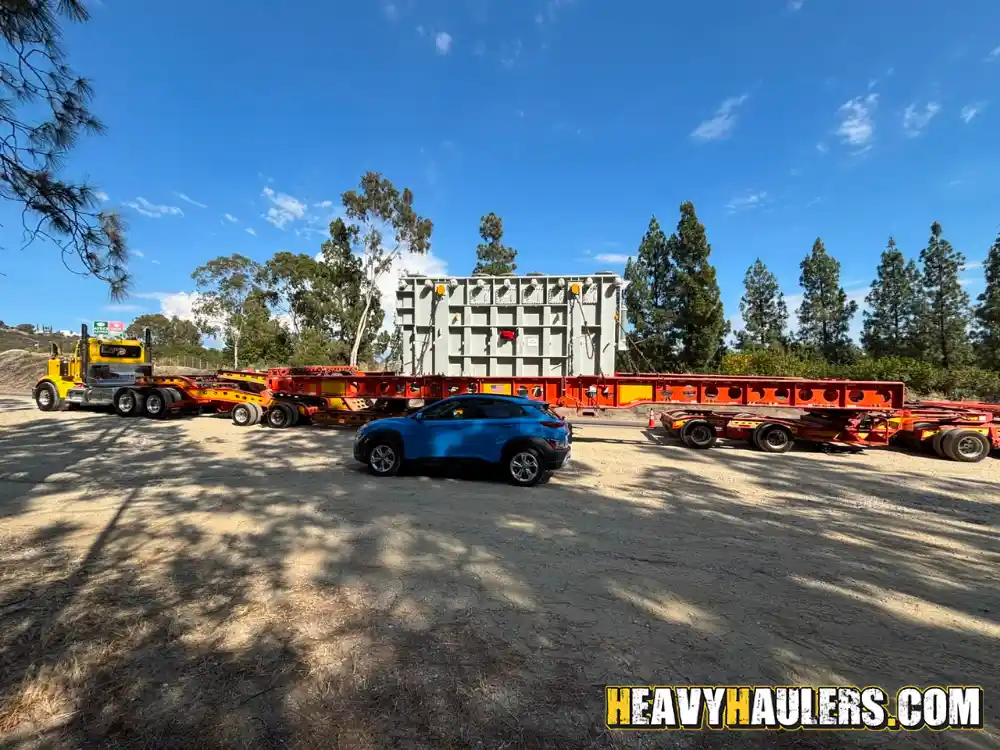
The transformer was positioned at an angle on the platform trailer, allowing the team to accommodate the enclosure beams while maintaining the support required for the 208,616-pound load. It was another adjustment that had to be resolved before the superload could safely begin its trip across Southern California.
Coordinating a 208,616-Pound California Superload
Once the transformer was loaded and properly supported, Dylan coordinated the superload move from Long Beach to Jacumba.
At 11.6 feet wide, 13.3 feet high, and more than 208,000 pounds before accounting for the transport equipment, this wasn't a standard heavy haul. The move required the permits, routing, escorts, and scheduling necessary to transport the transformer safely across California.
Police escorts were incorporated into the transport plan as the superload made its way toward the energy grid site. Dylan remained at the center of the coordination, managing the different parties and requirements involved in getting the transformer from its storage location to the prepared delivery site.
But reaching Jacumba didn't mean the difficult part was over.
Positioning a 550-Ton Crane Around Underground Infrastructure
Offloading presented one of the project's most complicated challenges.
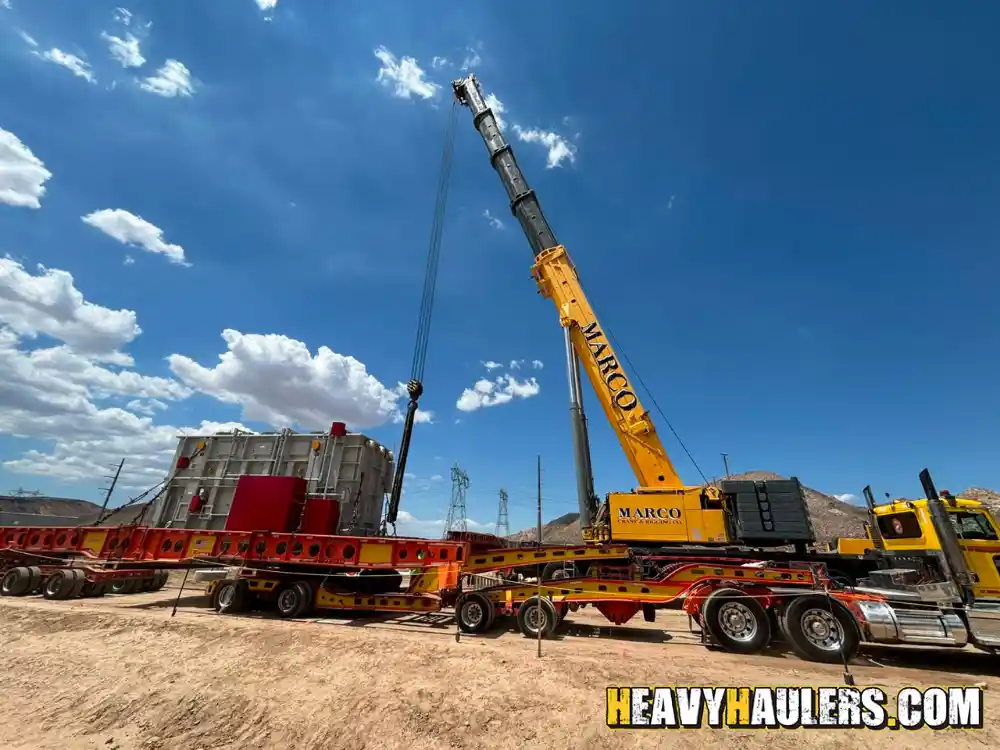
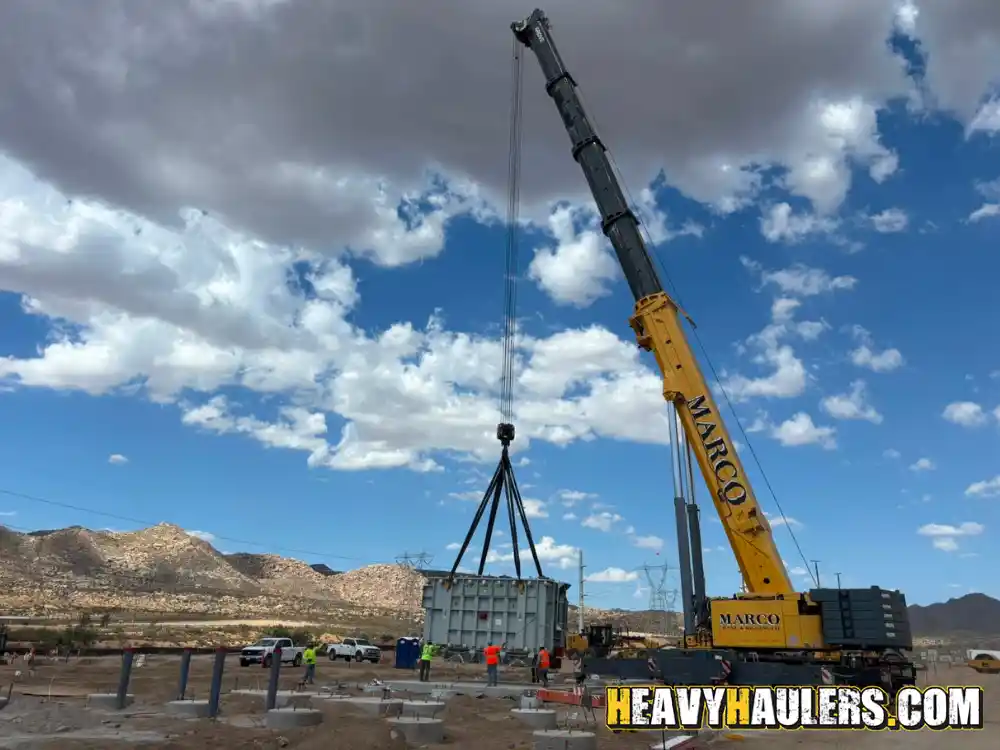
Dylan coordinated a 550-ton crane for the transformer offload. The size of the crane was only part of the equation. Underground piping associated with the transformer's containment system ran perpendicular to the pad, creating restrictions on where and how the crane could safely be positioned.
Ground-bearing pressure had to be considered carefully. Setting up the crane in the wrong location could place excessive pressure over the underground piping.
The crane therefore had to be crawled into the site and positioned at a specific angle to accommodate the underground infrastructure while still providing the positioning necessary to handle the transformer.
Combined with the newly constructed access ramp and the transformer's immense weight, the crane setup made detailed coordination between the transportation team, crane operators, contractors, and site personnel essential.
Safely Offloading the Transformer in Jacumba
After months of storage and planning, multiple project meetings, changes to site access, an unconventional loading configuration, superload transportation, police escorts, and a specialized crane setup, the transformer reached its final position.
The 550-ton crane successfully offloaded the $1.2 million transformer without incident.
For Dylan, the successful delivery demonstrated why major energy infrastructure transports require more than finding a truck capable of carrying the weight. Each stage depends on understanding how transportation equipment, site access, engineering requirements, crane operations, and project schedules affect one another.
When the conditions in the field changed, Dylan adapted the logistics plan around what was actually required to complete the project safely.
One Transformer Delivered, More Than 30 to Go
The Jacumba transport isn't the end of the project.
Heavy Haulers is preparing to coordinate more than 30 additional transformer deliveries to energy infrastructure sites throughout the United States. Each destination will bring its own access requirements, site conditions, routing considerations, and offloading challenges.
The successful California move provides a strong foundation for those upcoming transports. Dylan Barron's coordination of the first project showed how detailed planning and practical problem-solving can keep a highly specialized energy infrastructure shipment moving even when conditions don't match the original plan.
From direct vessel discharge and long-term storage to superload transportation and final crane placement, Dylan coordinated the moving pieces necessary to get this 208,616-pound transformer where it needed to go.