



Choose Heavy Haulers Because We Set the Standard
Plastic Tank Transport Services
Plastic tanks are large, lightweight relative to their volume, and highly vulnerable to structural damage from improper blocking and support during transport. A tank that arrives with a cracked wall, a distorted fitting connection, or a compromised base structure cannot be put into chemical or water service without repair that may not be achievable in the field. Heavy Haulers moves plastic tanks of all sizes, polymer types, and configurations to industrial facilities, agricultural operations, and construction projects nationwide. Call today for a free plastic tank shipping estimate.

Quick. Reliable. Hassle-Free.
Speak with an expert logistics agent to move your equipment quickly and at an affordable rate!
(800) 908-6206Plastic Tank Shipping Company Near You
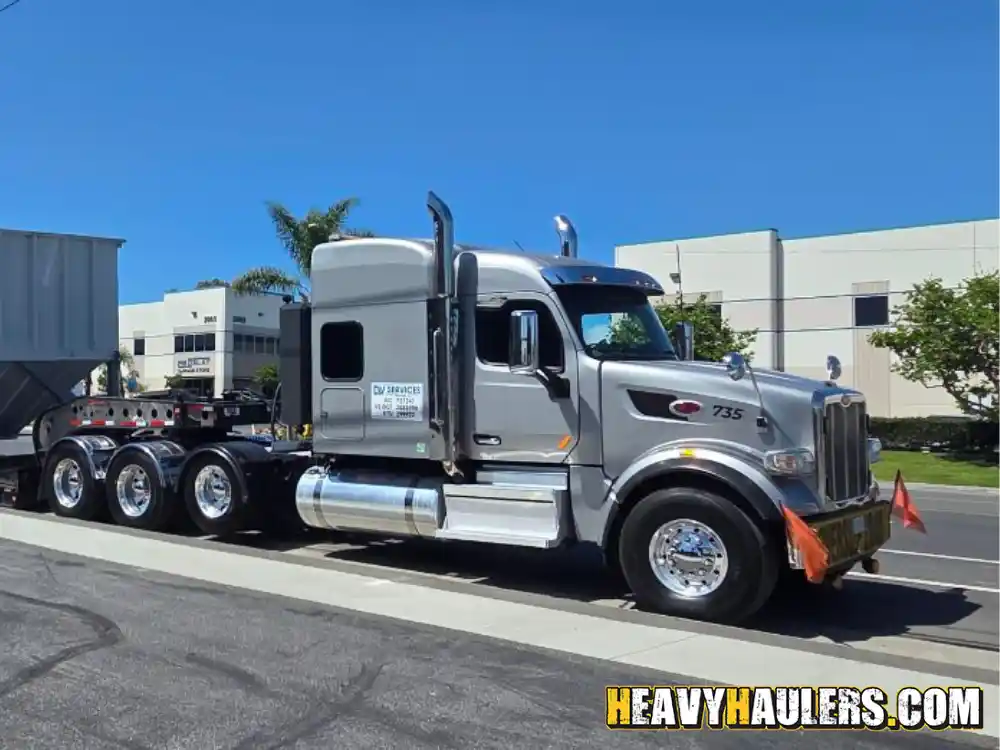
We haul plastic tanks across every application and size range, rotationally molded HDPE chemical storage tanks for industrial and agricultural use, vertical and horizontal polyethylene water storage tanks for rural and municipal applications, double-wall containment tanks for regulated chemical storage, fiberglass reinforced plastic tanks for corrosive chemical service, and custom-fabricated polypropylene process tanks for industrial manufacturing operations, to chemical plant construction sites, water utility projects, agricultural properties, and industrial facilities across the country. Plastic tanks are among the most challenging items in the fabricated plastic supply chain to transport correctly because their large volume creates wind load during transit, their relatively thin walls are structurally vulnerable to point loading from improper blocking, and their molded fittings and nozzles are precise connection points that are easily damaged during loading and offloading.
Our team has over 16 years of experience moving plastic tanks under the field conditions that tank installations actually present.
Understanding the Challenges of Plastic Tank Transpor
Plastic tank walls are designed to carry internal fluid pressure and hydrostatic load in the installed and filled condition. They are not designed to carry concentrated external point loads applied at random locations during transport. A tie-down strap placed directly across a plastic tank wall without a load distribution saddle applies concentrated compression that can create a wall deformation or crack at the contact location. That structural damage does not prevent the tank from being set at the installation site, but it creates a leak path that only becomes apparent after the tank is filled, at which point remediation requires draining and repair that was not planned.
Plastic tanks arrive from the manufacturer with molded or threaded fittings and nozzles that are the connection points for all piping and instrumentation in the installed system. Those fittings are positioned and oriented precisely to match the site piping layout, and they are the most structurally vulnerable points on the tank because they represent stress concentration geometry at the tank wall. An impact to a fitting during loading, or a tie-down strap that applies load through a fitting rather than through the tank wall, can create a crack at the fitting-to-wall interface that is invisible externally until the tank is pressurized in service.
Empty plastic tanks have low weight relative to their volume and high wind resistance due to their large surface area. A large plastic storage tank on a flatbed at highway speed experiences significant wind load that works against the tie-down system in directions that a standard cargo securement approach does not fully account for. A tank that is adequately secured against forward and rearward movement may not be adequately secured against the lateral and vertical wind loads that highway speed creates, and those loads can cause the tank to shift in ways that damage the tank wall at the contact points with the trailer deck.
Many plastic tanks are manufactured with integral base rings, leg structures, or skid supports that carry the tank weight in the installed condition and that must arrive undamaged for proper installation. A tank base ring that is cracked during transport creates an uneven bearing condition when the tank is installed that concentrates stress at the crack location during filling. A molded leg structure with an impact crack from rough handling creates a structural failure risk when the filled tank applies load to the damaged leg in service.
Double-wall containment tanks have an inner primary tank and an outer secondary containment wall with an annular space between them that provides secondary containment for regulated chemical storage applications. That annular space must remain sealed and free from liquid entry during both transport and service. Transport handling that damages either wall compromises the double-wall integrity in ways that affect the tank's regulatory compliance as a secondary containment system. For regulated chemical storage applications, double-wall integrity is a compliance requirement that transport handling directly affects.
Plastic tanks for agricultural, rural water supply, and remote industrial applications are installed at sites where access is not designed for the large trailers that carry them. A 10,000-gallon polyethylene tank on a flatbed requires a delivery route that can accommodate the trailer length, and a delivery site that has the crane or lifting equipment to offload the tank safely. Remote property access roads, farm field approaches, and rural right-of-way installations all present access challenges that have to be confirmed before the truck commits to the delivery route.
HEAVYHAULERS.COM
START YOUR SHIPMENT TODAY!

How Heavy Haulers Ensures Efficient and Safe Plastic Tank Hauling
Every plastic tank load we handle uses saddle or cradle support structures that distribute the tank weight and tie-down load across the tank wall in the way the tank manufacturer specifies. Load distribution saddles are sized and positioned to spread tie-down force across the maximum wall area rather than concentrating it at a binder contact arc. For round tanks, cradle angle matches the tank OD to prevent the point loading that occurs when a round tank rests on a flat surface at two contact lines. That saddle and cradle approach protects the tank wall from the point loading that creates structural damage in transit.
Every fitting and nozzle on a plastic tank we haul receives protective covering or padding before loading. Threaded openings receive plastic caps to prevent debris entry and thread damage. Flange-connected nozzles receive face protectors that prevent the impact that cracks the fitting-to-wall interface. Tie-down hardware is confirmed positioned away from fitting locations before the tank is secured. That fitting protection approach preserves the connection integrity that the installed piping system depends on.
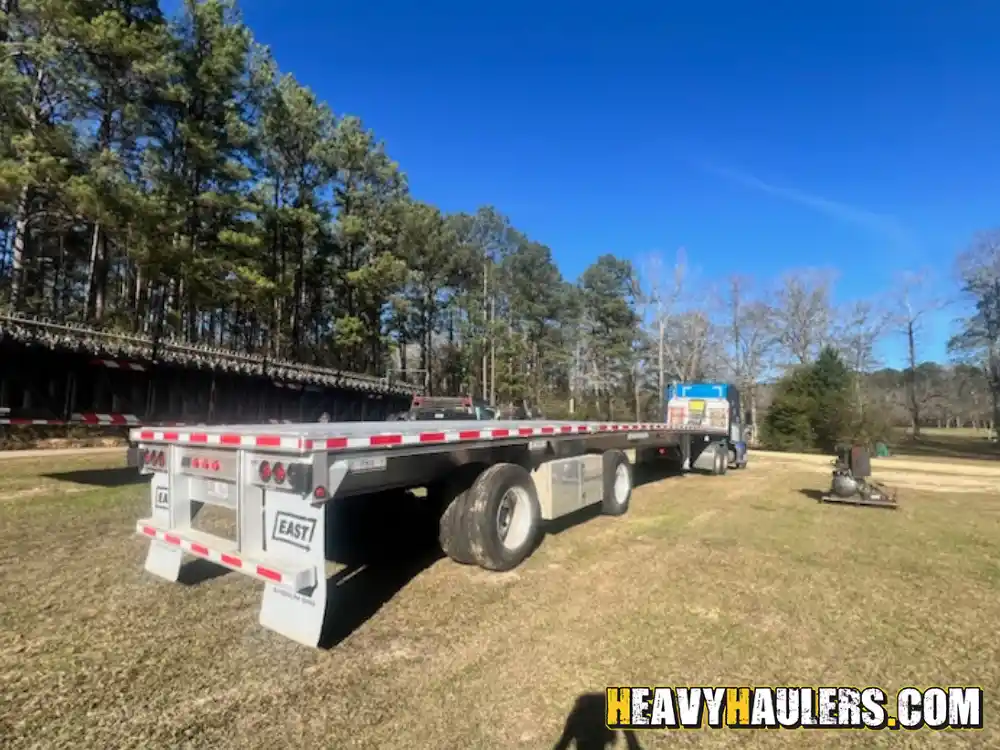
For large plastic tank loads where wind load at highway speed creates securement challenges beyond standard cargo tie-down, our logistics team plans the securement configuration to address lateral and vertical wind forces in addition to longitudinal braking forces. Additional tie-down points, wind deflector positioning, and trailer speed planning for extreme wind exposure conditions are all considered for large empty tank hauls. That wind load awareness reflects the real securement challenge that large, lightweight, high-surface-area freight presents at highway speed.
Before any plastic tank is loaded, our team identifies the base ring, leg structure, or skid support geometry and plans blocking placement to support the tank through those structural elements rather than through the tank wall. For tanks with integral leg structures, blocking is placed under the legs rather than under the tank wall between legs. For base ring tanks, the ring is supported on a flat, continuous surface that prevents the point loading that cracks base ring sections. That structural support approach delivers the tank with the base integrity that proper installation requires.
For double-wall containment tank deliveries, our team applies handling protocols that prevent the impact events that damage either the primary or secondary tank wall during loading and offloading. Crane lift points specified by the tank manufacturer are confirmed before loading and communicated to the offloading crane operator before delivery. The interstitial space leak detection connection points are protected during transit and confirmed sealed at delivery. That double-wall awareness approach preserves the regulatory compliance integrity that secondary containment applications require.
Before any plastic tank delivery departs for a remote or rural installation site, your Heavy Haulers specialist confirms access route conditions, ground bearing capacity in the tank setting area, and crane or lifting equipment availability with the installation contractor. For sites with unpaved approaches, weight-limited crossings, or equipment staging constraints, access limitations are identified and addressed before the truck is committed to the delivery route. That pre-coordination approach prevents the delivery failures that occur when large tank deliveries encounter site conditions that were not anticipated.

Ready To Haul Your Equipment?
Our Specialists Are Here To Make Your
Transport Simple And Stress-Free.
Why Choose Heavy Haulers for Plastic Tank Shipping Services?
Plastic tank transport failures create installation consequences that range from expensive repairs to complete replacement depending on the type and location of the damage. A wall deformation from an improperly placed binder creates a leak path that is not discovered until the tank is filled at the installation site. A cracked fitting connection requires factory repair or replacement before the tank can be commissioned. A damaged base ring creates an uneven installation condition that concentrates stress in service. Heavy Haulers has been moving plastic tanks for over 16 years with the wall protection, fitting integrity care, and remote site coordination that chemical processors, agricultural operators, and industrial facility builders depend on when the tank has to arrive ready to install and fill.
Wall Protection Through Proper Saddle and Cradle Support
Manufacturer-specified saddle and cradle configurations, load distribution across maximum wall area, and tie-down hardware positioned away from fitting locations are all standard on every plastic tank load. Protecting the tank wall from point loading is the primary transport quality requirement for plastic tanks, and our loading process treats it that way.
Fully Insured Services
Every plastic tank shipment carries full cargo insurance from the manufacturing or fabrication facility to the installation site. HDPE chemical tanks, polyethylene water tanks, double-wall containment tanks, and FRP process vessels are all protected against loss or transit damage throughout the haul.
16 Years of Large Plastic Component and Tank Transport
Heavy Haulers has been moving plastic tanks and large polymer fabrications for over 16 years. Our experience with wall protection, fitting integrity, wind load securement, and remote site coordination applies to every plastic tank load we dispatch.
Every Customer From Individual Property Owner to Major Industrial Facility
Whether you are a property owner receiving a water storage tank or an industrial plant contractor managing chemical storage tank installations, Heavy Haulers moves plastic tanks at any scale with the same wall protection standards and dedicated specialist.
Straightforward Pricing That Reflects Your Tank's Requirements
Plastic tank shipping estimates from Heavy Haulers account for tank type, polymer, capacity, fitting configuration, access conditions, and offloading equipment requirements before a rate is provided. One honest number before the truck is assigned.
Heavy Haulers is here to make sure your plastic tank arrives structurally intact and ready for installation. Contact us now for a free plastic tank shipping estimate.
We've Got You Covered
Count on us for the tools and services you need to get the job done
right and keep your projects moving!
equipment specifications
suitable trailers per equipment
Planning Assistance
Regional transport guidelines
Our heavy equipment specialists are ready to help