




Choose Heavy Haulers Because We Set the Standard
Polycarbonate Transport Services
Polycarbonate is specified for applications where impact resistance, optical clarity, and dimensional precision all matter. A scratch on a polycarbonate glazing panel, a UV haze on a transparent safety shield, or a dimensional distortion on a precision optical component all create product failures that are not recoverable without replacement. Heavy Haulers moves polycarbonate of all grades, forms, and quantities to glazing contractors, safety equipment manufacturers, and precision fabricators nationwide. Call today for a free polycarbonate shipping estimate.

Quick. Reliable. Hassle-Free.
Speak with an expert logistics agent to move your equipment quickly and at an affordable rate!
(800) 908-6206Polycarbonate Shipping Company Near You
Polycarbonate is simultaneously one of the toughest and one of the most surface-sensitive materials in common commercial use. Its impact resistance is exceptional, but its surface scratches from contact with materials that would not mark glass, and its optical clarity is permanently compromised by UV exposure that would have no visible effect on most other plastics.
Our team has over 16 years of experience moving polycarbonate with the surface protection and UV management that optical and architectural applications require. Call Heavy Haulers today for dependable polycarbonate hauling and get your free shipping estimate.
Understanding the Challenges of Polycarbonate Transport
Polycarbonate surfaces scratch from contact with materials that would not damage glass, including many plastics, fabrics, and even dust particles under pressure. Scratches on polycarbonate used in transparent applications are immediately visible in transmitted light and cannot be removed without specialized polishing equipment that affects optical flatness. For architectural glazing and safety glazing applications where optical clarity is the specification, a scratch on a polycarbonate panel during transport is a replacement event, not a touch-up opportunity.
Uncoated polycarbonate yellows rapidly on UV exposure, transitioning from water-clear optical clarity to a visible yellow-brown tint within weeks of sustained direct sunlight exposure. Most architectural polycarbonate products are produced with UV-protective hard coatings that prevent yellowing in service, but those coatings do not provide unlimited UV resistance during extended open transport. Polycarbonate panels transported without UV protection on an open flatbed during a multi-day summer haul can develop perceptible yellowing before they are ever installed, and that yellowing cannot be reversed.
Polycarbonate sheet and panel products ship from the manufacturer with protective masking film on one or both surfaces. That masking film is applied with an adhesive system chosen for compatibility with polycarbonate and for clean removal without adhesive residue. When masking film is left on polycarbonate in hot conditions for extended periods, the adhesive can migrate into the polycarbonate surface in ways that leave permanent adhesive residue marks when the film is removed. Managing masking film condition during hot-weather transport prevents the adhesive migration that creates surface marks that appear after the masking is removed.
Polycarbonate multiwall panels have open cell channels along the panel length that must be sealed at the cut ends to prevent moisture and debris entry during transport and installation. Open cell ends that admit moisture during transport develop internal condensation during temperature cycling that leaves mineral deposits on the inner cell wall surfaces. Those deposits are visible through the transparent polycarbonate as a haze pattern that matches the cell geometry and that cannot be removed after the cells are sealed. End sealing on multiwall panels before transport is not optional. It is a material quality requirement.
Polycarbonate for optical lens, display, and precision safety applications is produced to flatness and thickness tolerances that affect optical performance and safety certification. Temperature-induced dimensional change during transport can temporarily push polycarbonate components outside their dimensional specification, and for applications where dimensional certification is required, immediate post-transit inspection before thermal equilibration can create unnecessary rejection of dimensionally acceptable components.
Bullet-resistant polycarbonate for security glazing applications is produced as a laminated assembly of multiple polycarbonate plies bonded with interlayer materials. The ballistic performance of the laminate depends on the integrity of those bonds throughout the entire panel area. Impact or flexural loading during transport that initiates delamination between plies creates a local reduction in ballistic resistance that is not visible externally but that affects the panel's ballistic certification. For security glazing applications where ballistic certification is a compliance requirement, laminate integrity from the manufacturer through delivery is a quality requirement that transport handling affects.
HEAVYHAULERS.COM
START YOUR SHIPMENT TODAY!
How Heavy Haulers Ensures Efficient and Safe Polycarbonate Hauling
Our drivers inspect masking film condition on every polycarbonate shipment at the supply facility. For summer hauls where masking adhesive migration is a concern, our logistics team evaluates delivery timing and trailer temperature conditions before dispatch. For multiwall panels, cell end sealing condition is confirmed before loading. That masking and end sealing attention addresses the two most common transport-related surface quality failures on polycarbonate products.
Every polycarbonate load we handle uses non-abrasive, polycarbonate-compatible separation materials between all panel and sheet layers. No material harder than soft foam contacts polycarbonate surfaces at any point during loading, transit, or offloading. Binder hardware is covered with rubber sleeves at every polycarbonate surface contact location. That non-abrasive standard is applied throughout every polycarbonate load because polycarbonate's scratch sensitivity means there is no safe abrasive contact level.
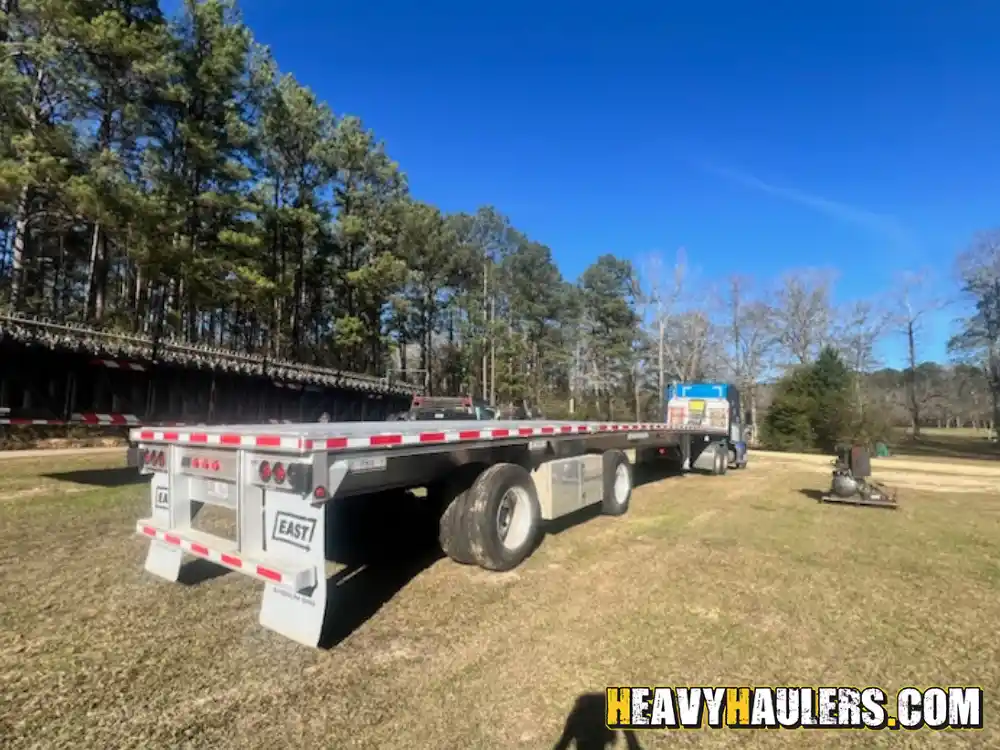
Every polycarbonate load we haul on open flatbed equipment receives opaque, breathable UV-blocking covering before the truck departs the supply facility. For coated architectural polycarbonate where UV protection of the factory coating is the concern, breathable covering that limits UV exposure without trapping heat against the coated surface is used. That UV protection standard is applied regardless of trip length because UV degradation on polycarbonate is cumulative and begins with the first UV exposure event.
For bullet-resistant polycarbonate laminate deliveries to security glazing applications, our team applies handling protocols that prevent the flexural loading and impact events that initiate inter-ply delamination. Laminate panels are supported across their full face area during every handling event. No point loading is allowed on laminate panel faces from forklift tines or blocking corners. That full-face support and impact prevention approach preserves the inter-ply bond integrity that ballistic certification depends on.
For optical-grade polycarbonate deliveries to lens and display fabricators with dimensional certification requirements, your Heavy Haulers specialist communicates estimated delivery time and trailer temperature conditions to the receiving quality team before arrival. That communication allows the receiving team to plan thermal equilibration time before dimensional inspection, preventing the unnecessary rejection of thermally-displaced but dimensionally acceptable components.
Before any polycarbonate panel delivery departs for a glazing or architectural installation project, your Heavy Haulers specialist confirms delivery access, staging area conditions, and installation sequence requirements with the glazing contractor. For large-format architectural polycarbonate panels, handling equipment availability and panel orientation requirements at the installation site are confirmed before the truck is dispatched. That delivery coordination reduces the handling events between the truck and the installation point, protecting panels through the final delivery stage.

Ready To Haul Your Equipment?
Our Specialists Are Here To Make Your
Transport Simple And Stress-Free.
Why Choose Heavy Haulers for Polycarbonate Shipping Services?
Polycarbonate applications depend on optical clarity, surface condition, and dimensional accuracy that transport handling can permanently compromise before installation begins. A scratch on an architectural glazing panel is a replacement event. UV yellowing from an open haul is not reversible. Multiwall panel cell contamination from an unsealed transport creates an internal haze that the glazing contractor cannot explain to the building owner. Heavy Haulers has been moving polycarbonate for over 16 years with the non-abrasive separation standards, UV protection practices, and masking film management that glazing contractors, safety equipment fabricators, and optical manufacturers depend on when polycarbonate quality at delivery defines the finished product.
Non-Abrasive Contact as the Absolute Standard
No material harder than soft foam contacts polycarbonate surfaces at any point on any load we handle. That non-abrasive standard exists because polycarbonate's scratch sensitivity means there is no acceptable abrasive contact, only protection from it.
Fully Insured From Manufacturer to Glazing or Fabrication Site
Every polycarbonate shipment carries full cargo insurance from the supply facility to the installation or fabrication site. Architectural sheet, multiwall panels, optical-grade polycarbonate, and bullet-resistant laminates are all protected against loss or transit damage throughout the haul.
16 Years of Optical and Architectural Plastic Transport
Heavy Haulers has been moving polycarbonate and optical-grade plastic materials for over 16 years. Our experience with scratch prevention, UV management, masking film care, and laminate integrity protection applies to every polycarbonate load we dispatch.
Every Customer From Individual Homeowner to Commercial Glazing Contractor
Whether you are a homeowner replacing a single polycarbonate skylight panel or a commercial glazing contractor supplying a large architectural project, Heavy Haulers moves polycarbonate at any scale with the same non-abrasive standards and dedicated specialist.
Pricing That Reflects the Optical Quality Your Application Requires
Polycarbonate shipping estimates from Heavy Haulers account for grade, surface coating specification, UV protection requirements, panel dimensions, and delivery site conditions before a rate is provided. One complete number that reflects what polycarbonate transport quality actually costs.
Heavy Haulers is here to make sure your polycarbonate arrives in optical condition and ready for your glazing or fabrication operation. Contact us now for a free polycarbonate shipping estimate.
We've Got You Covered
Count on us for the tools and services you need to get the job done
right and keep your projects moving!
equipment specifications
suitable trailers per equipment
Planning Assistance
Regional transport guidelines
Our heavy equipment specialists are ready to help