



Choose Heavy Haulers Because We Set the Standard
Aluminum Transport Services
Aluminum moves through more industries and more product forms than almost any other non-ferrous metal in commercial use. From structural sheet and precision plate to coil stock and extruded tube, every form has its own handling requirements and its own consequences for getting transport wrong. Heavy Haulers moves aluminum of all types and quantities to fabricators, manufacturers, distributors, and construction projects nationwide. Contact us today for a free aluminum shipping estimate.

Quick. Reliable. Hassle-Free.
Speak with an expert logistics agent to move your equipment quickly and at an affordable rate!
(800) 908-6206Aluminum Shipping Company Near You
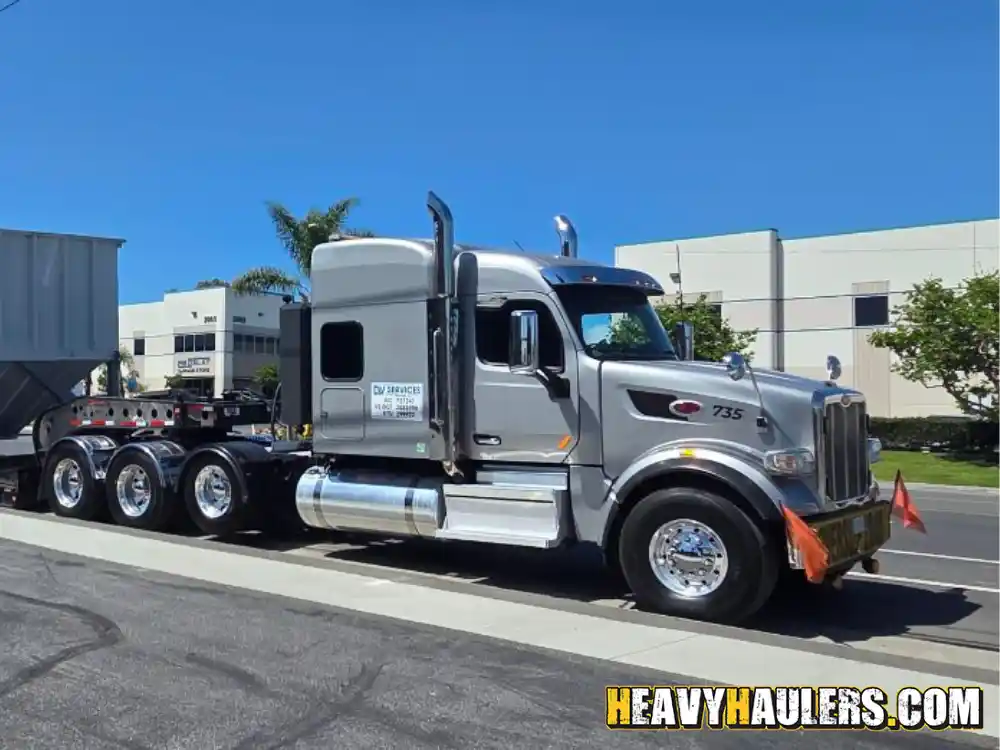
Aluminum is lighter than steel but no less demanding as freight. Its surface finishes are more vulnerable to scratching than most steel products, its dimensional tolerances in precision forms are tighter, and its reaction to dissimilar metal contact creates corrosion risks that steel does not face in the same way.
Our team has over 16 years of experience moving aluminum products with the surface protection, contamination prevention, and supply chain coordination that aluminum supply chains require. Call Heavy Haulers today for dependable aluminum hauling services and get your free shipping estimate.
Understanding the Challenges of Aluminum Transport
Aluminum surfaces scratch more easily than most steel products at equivalent gauge and finish. Mill-finish aluminum sheet develops visible scratches from inter-layer contact during transit that would not mark hot-rolled steel sheet under the same conditions. Anodized and painted aluminum products have finish coatings that are thinner than equivalent steel paint systems and more sensitive to abrasion at contact points. That heightened scratch sensitivity means inter-layer separation and binder placement practices that are adequate for steel are insufficient for aluminum without modification.
Aluminum is electrochemically active relative to steel, and direct contact between aluminum and carbon steel in a wet environment initiates galvanic corrosion on the aluminum surface at the contact point. Carbon steel blocking materials, steel binder hardware contacting bare aluminum surfaces, and aluminum products stored adjacent to carbon steel freight on the same trailer all create galvanic corrosion initiation sites. For structural and architectural aluminum applications where surface integrity affects both appearance and long-term corrosion performance, galvanic contact during transport is not a minor handling issue.
Precision aluminum plate for tooling, aerospace, and machining applications is manufactured to flatness and dimensional tolerances that determine its usability in the application. Aluminum plate that develops a bow or warp from improper support during transport, or that is distorted by uneven stacking pressure, requires stress relief or straightening before precision machining operations can begin. For aerospace-grade aluminum where flatness tolerance is a specification requirement, incoming dimensional condition is a production quality input that transport handling directly affects.
Aluminum alloys span a wide range of mechanical properties, corrosion resistance characteristics, and machinability profiles that are determined by alloy composition. 6061 aluminum and 7075 aluminum look identical but have very different strength and formability characteristics. A mixed-alloy delivery where bundle identification is not confirmed against the order specification creates the risk of the wrong alloy being processed for an application where the correct alloy was specified for a performance reason.
Aluminum is lighter than steel, but aluminum coil and plate loads can still approach legal weight limits when large format, thick-gauge products are involved. Heavy aluminum plate in thick sections accumulates weight at a rate that surprises shippers who assume aluminum loads are always well within weight limits. Pre-load weight calculation based on actual alloy density, thickness, and dimensions is the only approach that reliably catches weight compliance issues on heavy aluminum product loads.
Anodized aluminum and painted aluminum products used in architectural, transportation, and consumer product applications have surface specifications that reflect the end product's appearance and performance requirements. An anodized surface with handling marks, a painted panel with abrasion damage, or a coated extrusion with contact impressions from improper blocking all create rejection events at the fabrication or installation stage that are not recoverable without surface rework or material replacement.
HEAVYHAULERS.COM
START YOUR SHIPMENT TODAY!

How Heavy Haulers Ensures Efficient and Safe Aluminum Hauling
Every aluminum load we handle uses non-contaminating blocking, dunnage, and binder contact materials throughout the loading and transit process. Carbon steel hardware that contacts aluminum surfaces is covered with rubber or plastic sleeves. Blocking materials are plastic, rubber, or aluminum-compatible hardwood that does not create galvanic contact. Inter-layer separation uses non-abrasive foam or fabric materials that prevent the scratch-initiating contact between aluminum surfaces that standard dunnage creates.
Our loading crew identifies the surface finish specification of each aluminum product before the loading sequence begins. Mill-finish sheet gets non-abrasive separation. Anodized and painted products get protective film application at contact areas and foam-backed inter-layer separation throughout the bundle. For mirror-finish and architectural-grade aluminum, padded contact at every hardware location is confirmed before the first piece is loaded. That finish-matched approach reflects the actual scratch sensitivity of each aluminum surface condition.
Before any aluminum load is accepted, our team confirms bundle alloy identification against the delivery documentation. For precision machining and aerospace applications where alloy specification is a performance requirement, alloy certification documentation is confirmed before the truck is loaded and travels with the delivery. Mixed-alloy loads are loaded with clear bundle segregation and identification maintained throughout the load so the receiving facility can verify alloy assignment without breaking down bundles.
For thick-gauge aluminum plate and heavy coil loads, our logistics team calculates total load weight based on alloy density, thickness, and confirmed dimensions before the load configuration is finalized. That calculation prevents the weight compliance surprises that occur when aluminum loads are assumed to be within limits because aluminum is lighter than steel.
For precision aluminum plate and tooling plate loads, dunnage is placed at support intervals calculated to prevent gravity-induced bow across the plate span during transit. For stacked plate loads, support intervals are aligned vertically between layers so stacking load transfers straight down through the dunnage rather than across unsupported plate spans. That support discipline maintains the flatness specification that precision machining applications require on incoming material.
Your Heavy Haulers specialist coordinates aluminum delivery timing with the receiving operation's production schedule before the truck is dispatched. For service center replenishment runs, delivery windows are confirmed against receiving dock availability and inventory staging capacity. For fabrication shop deliveries, production sequence and alloy-specific job requirements are factored into delivery timing. That supply chain coordination keeps aluminum arriving when the operation is ready for it.

Ready To Haul Your Equipment?
Our Specialists Are Here To Make Your
Transport Simple And Stress-Free.
Why Choose Heavy Haulers for Aluminum Transport Services?
Aluminum supply chain failures are visible immediately at the processing line or the fabrication bench. A scratched anodized panel cannot be installed in an architectural application. A bowed precision plate requires straightening before the machining program can run. A wrong-alloy delivery creates a production hold while replacement material is sourced. Heavy Haulers has been moving aluminum products for over 16 years with the contamination prevention, surface protection, and alloy verification discipline that aerospace fabricators, architectural suppliers, and industrial manufacturers depend on when aluminum quality cannot be compromised.
One Carrier for Every Aluminum Product Form
Sheet, plate, coil, tube, bar, and specialty aluminum products all move with Heavy Haulers. One carrier relationship covers your entire aluminum goods supply chain regardless of product form or application.
Fully Insured Services
Every aluminum shipment we handle carries full cargo insurance regardless of alloy grade, surface finish, or product form. Mill-finish structural aluminum and aerospace-grade precision plate are both protected against loss or transit damage throughout the haul.
16 Years of Aluminum Transport Experience
Heavy Haulers has been moving aluminum and non-ferrous metal products for over 16 years. Our experience with galvanic contamination prevention, surface finish protection, and alloy verification applies to every aluminum load we dispatch.
We Serve Every Customer
From an individual fabricator receiving a single plate order to a large service center managing high-volume aluminum distribution, Heavy Haulers handles aluminum transport at any scale with the same professional standard and dedicated specialist.
Transparent Pricing Before the Truck Is Assigned
Aluminum shipping estimates from Heavy Haulers account for alloy grade, product form, surface finish specification, load weight, and delivery site conditions before a rate is provided. One complete number before any commitment is made.
Heavy Haulers is here to make sure your aluminum arrives safely, on time, and in the condition your operation requires. Contact us now for a free aluminum shipping estimate.
COMMON Aluminum WE TRANSPORT

We've Got You Covered
Count on us for the tools and services you need to get the job done
right and keep your projects moving!
equipment specifications
suitable trailers per equipment
Planning Assistance
Regional transport guidelines
Our heavy equipment specialists are ready to help