



Choose Heavy Haulers Because We Set the Standard
Aluminum Coil Transport Services
Aluminum coil feeds roll forming lines, stamping presses, and continuous processing operations that cannot tolerate a delivery that arrives with edge damage, ID crush, or surface contamination. Heavy Haulers moves aluminum coil of all alloys, gauges, and widths to service centers, roll formers, and manufacturing facilities nationwide. Call today for a free aluminum coil shipping estimate.

Quick. Reliable. Hassle-Free.
Speak with an expert logistics agent to move your equipment quickly and at an affordable rate!
(800) 908-6206Aluminum Coil Shipping Company Near You
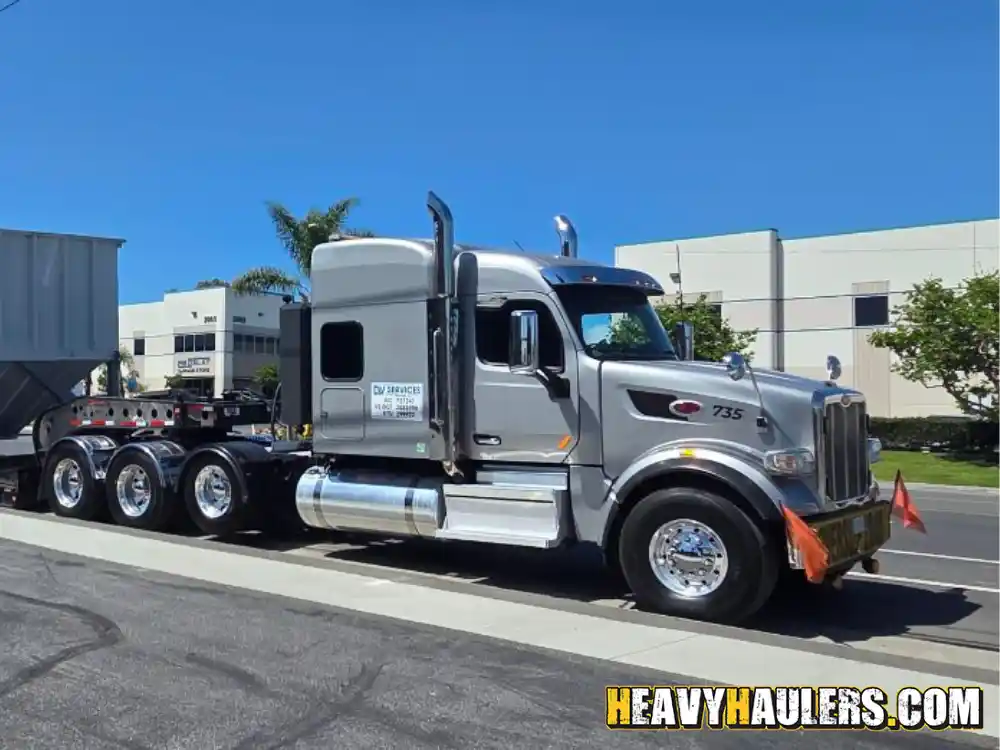
Aluminum coil transport shares some characteristics with steel coil transport but presents its own unique set of challenges driven by aluminum's lower density, higher surface sensitivity, and galvanic reactivity that steel coil handling does not encounter.
Our team has over 16 years of experience moving aluminum coil with the saddle block precision, surface protection, and processing line coordination that aluminum supply chains require. Call Heavy Haulers today for dependable aluminum coil hauling and get your free shipping estimate.
Understanding the Challenges of Aluminum Coil Transport
Aluminum coil ID crush from improperly sized or positioned saddle blocks is a more significant concern than with steel coils because aluminum is softer and deforms more readily under concentrated loading at the coil ID contact points. Saddle blocks that are undersized for the coil OD allow the coil to bear on its ID edge at the saddle contact locations, deforming the inner wraps in ways that prevent proper mandrel engagement during processing. For softer aluminum alloys in thin gauges, ID deformation from saddle contact can propagate through multiple inner wraps before the damage is visible at the coil ID surface.
Painted and coated aluminum coil for building products, transportation panels, and architectural applications arrives with factory-applied coatings that define the end product's appearance and performance. A paint surface abrasion from coil-to-coil contact on the trailer, a coating transfer from a contaminated saddle block surface, or a pressure mark from a binder positioned against the coil face all create surface defects that show up when the coil is processed and the coated sheet is inspected at the slitting or roll forming line.
Aluminum coil edges, whether mill edges or slit edges, are dimensional features that affect roll forming die engagement and part edge quality in stamped components. Edge damage from handling impacts, binder contact against coil edges, and coil-to-coil contact on the trailer all create edge irregularity that causes processing problems downstream. For tight-tolerance roll formed profiles where edge condition affects the forming die contact geometry, incoming coil edge quality is a production parameter that transport handling directly influences.
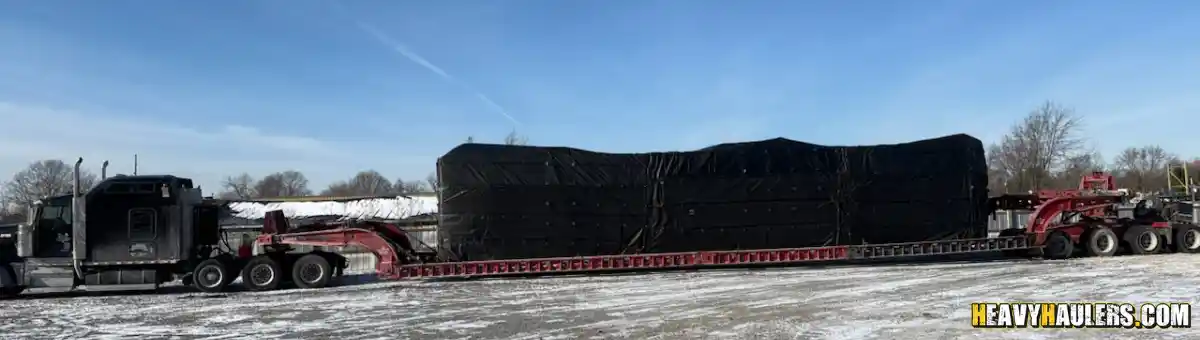
Aluminum coil is lighter than steel coil of the same dimensions, but large-diameter, wide aluminum coil still represents substantial weight that requires appropriate saddle block sizing and positioning. The lower density of aluminum means a coil of equivalent OD and width to a steel coil weighs less, but that weight is still concentrated at the saddle contact points in the same way. Saddle blocks sized for steel coil weights may be appropriate dimensionally for aluminum coils but may use contact materials that are too hard for aluminum's softer surface without the rubber facing that prevents coil OD marking.
Aluminum coils in contact with unprotected carbon steel saddle blocks in a wet environment develop galvanic corrosion at the contact points. That corrosion appears as a rust stain pattern on the coil OD surface that is very difficult to distinguish from the contact mark geometry. For bare aluminum coil destined for anodizing or painting after processing, galvanic contamination at the saddle contact points creates adhesion failure in the subsequent surface treatment at those locations.
Continuous processing lines running aluminum coil operate on production sequences where specific alloys, gauges, and coating conditions run in a planned order that minimizes changeover time and scrap. A coil delivery that arrives out of the planned processing sequence forces the line to either run out of sequence, which increases changeover cost, or hold the delivered coil until the planned slot in the sequence arrives, which requires staging space the facility may not have.
HEAVYHAULERS.COM
START YOUR SHIPMENT TODAY!
How Heavy Haulers Ensures Efficient and Safe Aluminum Coil Hauling
Every aluminum coil load uses saddle blocks with rubber-faced contact surfaces that distribute coil OD bearing load without marking the aluminum surface. Saddle blocks are sized for each coil's specific OD and positioned symmetrically relative to the coil center. For softer alloys in thin gauges, saddle contact width is increased to reduce contact pressure per unit area at the coil OD. That aluminum-specific saddle approach prevents both the ID crush and the OD surface marking that steel-calibrated saddle blocks create on aluminum coils.
For painted and coated aluminum coil loads, our team uses saddle block facing materials and inter-coil separation that prevent coating contact damage throughout the haul. Coil faces are protected from any direct contact with trailer hardware, adjacent coils, or binder contact surfaces. For multi-coil loads where coils are staged adjacent to each other on the trailer, non-abrasive spacers are placed between coil OD surfaces at contact locations to prevent paint transfer and abrasion between coils.
Aluminum coil edges receive foam or rubber edge protectors at both width ends before loading. Binder hardware is positioned away from coil edge locations. For slit-edge coil with tight edge quality requirements, edge protectors with non-metallic contact surfaces are used at all hardware contact points adjacent to the coil width. That edge protection approach preserves the edge condition that roll forming and stamping operations require on incoming aluminum coil.
Every contact point between aluminum coil and trailer or blocking materials uses non-contaminating contact materials that prevent galvanic contact in wet transit conditions. Saddle blocks with rubber facing, plastic-capped binder hooks, and non-metallic inter-coil spacers eliminate the carbon steel contact that initiates galvanic corrosion on aluminum coil surfaces. That contamination prevention standard is applied on every aluminum coil load regardless of alloy grade or intended surface treatment.
For multi-coil loads with varying coil weights and OD dimensions, our logistics team plans axle load distribution based on confirmed coil weight and planned trailer position for each coil. Heavier coils are positioned to distribute weight within legal axle limits across the trailer's drive and rear axle groupings. For wide-body aluminum coil that concentrates weight across a narrow trailer width band, axle load calculations account for the lateral weight distribution as well as the longitudinal distribution.
Before any aluminum coil delivery departs for a continuous processing line, your Heavy Haulers specialist confirms the planned processing sequence with the facility's production scheduler and stages coil delivery to match that sequence. For facilities with limited coil staging capacity, delivery timing is coordinated to bring each coil to the line when its processing slot arrives rather than delivering the full order in advance and creating a staging congestion problem at the coil receiving area.

Ready To Haul Your Equipment?
Our Specialists Are Here To Make Your
Transport Simple And Stress-Free.
Why Choose Heavy Haulers for Aluminum Coil Shipping Services?
Aluminum coil transport failures show up immediately at the processing line. ID crush that prevents mandrel engagement shuts the line down. Coated coil with surface defects from transit contact fails the inspection before the first foot of sheet is slit. Edge damage on roll forming coil causes die engagement problems that produce off-specification parts from the first coil turn. Heavy Haulers has been moving aluminum coil for over 16 years with the aluminum-appropriate saddle selection, coated surface protection, and galvanic contamination prevention that service centers, roll formers, and manufacturing operations depend on when the coil has to arrive processable.
Aluminum-Specific Saddle Standards on Every Load
Rubber-faced saddle blocks sized and positioned for each aluminum coil's specific OD and alloy are standard on every aluminum coil load we handle. That aluminum-specific approach prevents both ID crush and OD surface marking that steel-calibrated saddle practices create on softer aluminum alloys.
Fully Insured Hauling Services
Every aluminum coil shipment carries full cargo insurance from the loading facility to the processing line. Bare mill-finish coil, painted building products coil, and specialty alloy coil are all protected against loss or transit damage throughout the haul.
16 Years of Coil Transport Experience
Heavy Haulers has been moving aluminum coil and non-ferrous metal products for over 16 years. Our experience with aluminum saddle requirements, coated surface protection, and galvanic contamination prevention applies to every coil load we dispatch.
Every Customer From Small Processor to Large Production Facility
Whether you are a small roll forming operation receiving a single coil or a large processing facility managing continuous coil inventory replenishment, Heavy Haulers moves aluminum coil at any scale with the same saddle precision and dedicated specialist.
Straightforward Pricing
Aluminum coil shipping estimates from Heavy Haulers account for alloy grade, coating condition, coil OD and width, total load weight, and delivery facility requirements before a rate is provided. One complete number before the truck is assigned.
Heavy Haulers is here to make sure your aluminum coil arrives in processable condition and on schedule for your production line. Contact us now for a free aluminum coil shipping estimate.
We've Got You Covered
Count on us for the tools and services you need to get the job done
right and keep your projects moving!
equipment specifications
suitable trailers per equipment
Planning Assistance
Regional transport guidelines
Our heavy equipment specialists are ready to help